If you’re buying a new-build in Portugal, there’s a good chance nobody has walked you through what the last six weeks of the purchase actually look like. The agent talks about the finishes, the lawyer talks about the paperwork, and the developer talks about the completion date — which has probably moved twice already. What nobody explains is the sequence, and the sequence is where buyers either protect themselves or quietly give away every bit of leverage they have.
I’m a builder, not a lawyer or an agent, so this is the builder’s version: what happens, in what order, and where the money sits at each step. It’s the money that explains everything else.
Where your money is, and why it matters
Look at your CPCV — the promissory contract you signed when you reserved the unit. Most new-build contracts in Portugal collect somewhere between 20 and 30 per cent of the price in stages before completion. The remaining 70 to 80 per cent changes hands at one moment: the escritura, the final deed, signed at the notary.
Sit with that for a second. Until the escritura, the developer has built you an apartment and been paid a deposit for it. The bulk of their money — the part that makes the whole project work for them — is still in your account. After the escritura, it’s in theirs.
That means there is exactly one period in the entire purchase where the developer needs something from you: the weeks before you sign. A defect raised in that window gets attention, because your final payment is sitting behind it. The same defect raised three months after you’ve got the keys becomes an email thread. Then a reminder. Then “our technical team will assess.” I’ve watched both versions play out, and the difference has nothing to do with the defect and everything to do with the date.
The sequence, step by step
The completion notice. At some point the developer’s paperwork catches up with the building: the câmara issues the licença de utilização, and you’ll be notified that the property is ready and the escritura can be scheduled. From here things move quicker than most buyers expect — often a matter of weeks.
The walk-through. Before or around the escritura you’ll be invited to visit the finished unit — usually with the developer’s sales rep, usually planned for about twenty minutes. This is the visit where you’re expected to look at your new kitchen, say how lovely it all is, and sign a piece of paper.
The auto de receção. That piece of paper is the formal handover record — the document that says you’ve received the property, and in what condition. I’ve written a separate post on it because it deserves one; the short version is that any defect written on that document before you sign is a defect the developer is on record as owing you. Anything you noticed but didn’t write down becomes your word against theirs. It is, quietly, the most important twenty minutes of the purchase.
The escritura. The deed itself, signed at the notary — your lawyer will usually attend with you or on your behalf via power of attorney. The final payment is released, the keys are yours, and so is every problem that wasn’t documented before that moment.
After completion. You still have legal defect-guarantee periods as the buyer of a new property — the windows and dates depend on your contract and the nature of the defect, and your lawyer should confirm exactly which apply to you. But enforcing a guarantee against a developer who’s been paid in full is a slower, harder game than getting a fix agreed while your money was still waiting. The guarantee is the safety net, not the strategy.
Buying new? A handover inspection before you sign gets the defects on paper while the developer still has to fix them. From €590 + IVA.
What goes wrong in practice
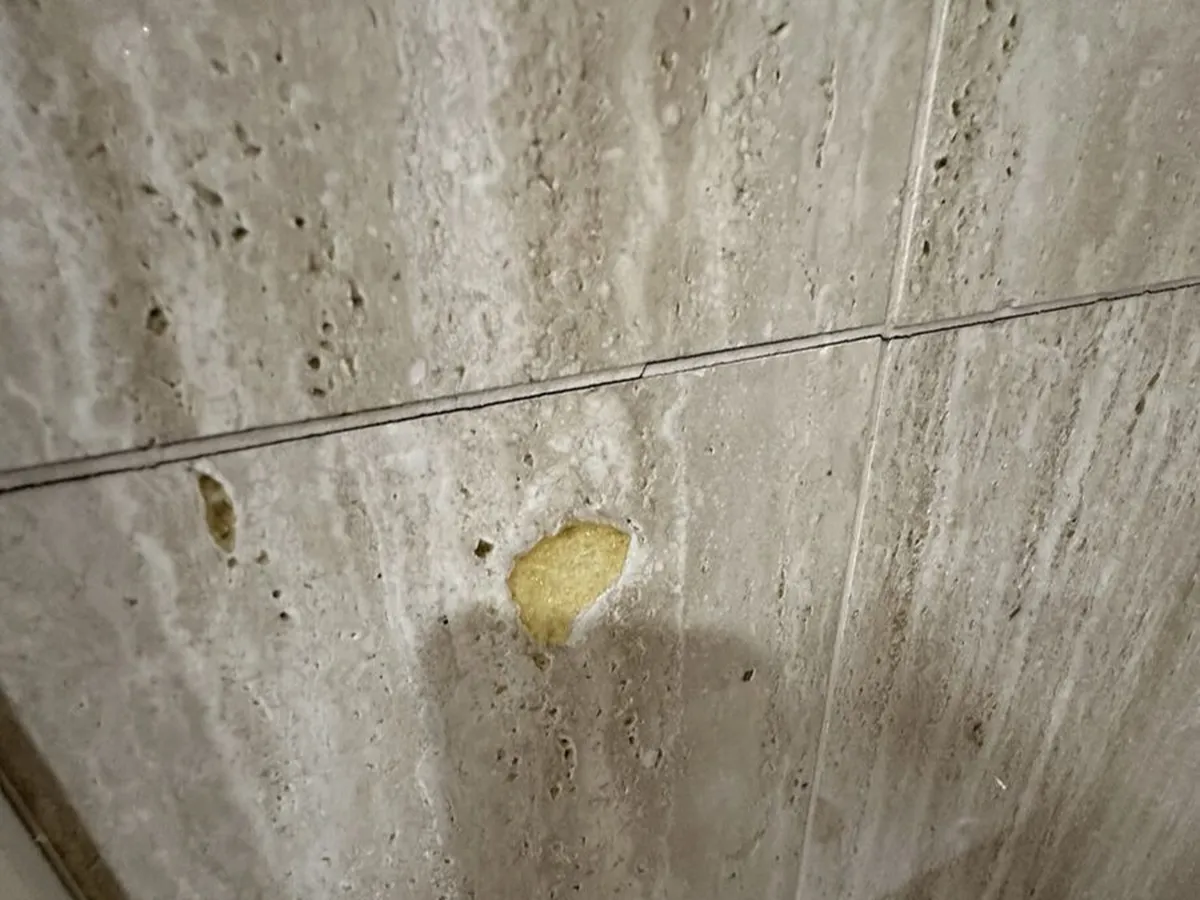
Brand new doesn’t mean defect-free. A new apartment here is the work of a dozen subcontracted trades under time pressure at the end of a project, and it shows up in patterns any builder will recognise: terrace thresholds where the water falls towards the door instead of away from it, hollow tiles that lift a year later, sockets that were never wired to the end of the circuit, hot water that takes four minutes to arrive, blinds that jam in the last metre of travel, and silicone that was done on the last Friday of the job.
Then there’s the category you can’t see at all. Insulation that’s missing or slumped inside a finished wall doesn’t show on any walk-through — the wall is painted and beautiful, and it will cost you money every winter for as long as you own the place. Moisture already sitting inside a screed from a slow leak won’t stain the ceiling for a year. Thermal bridges at slab edges and window reveals are invisible in July and grow mould in January. A thermal camera finds all of this in minutes; eyes never will.
Most snag lists on a typical new unit run to dozens of items. Most are minor. The point isn’t the count — it’s that a handful usually matter, and every one of them is cheaper to fix before the escritura than after, for the simple reason that before the escritura, someone else is highly motivated to fix them.
The timeline that protects you
Working backwards from your escritura date, this is the sequence that actually works:
Six weeks out: inspect the property — properly, not the twenty-minute version. Every tap run, every socket tested, every window locked and unlocked, and the thermal survey done. The findings go into a snag list in Portuguese, delivered to the developer through your lawyer, with a defect letter attached to the file.
Weeks two to four: the developer fixes. This is where the leverage does its work — fixes that would take a year of emails after completion happen in a fortnight while the final payment waits.
Week five: the re-check. Someone goes back and confirms the fixes are real — actually repaired, not painted over. Compressed timelines lose the re-check, and the re-check is where the value lands.
Escritura: you sign the auto de receção with the record already straight, complete the purchase, and take the keys knowing exactly what you’re receiving.
If your timeline is already shorter than that, it’s not too late — even an inspection in the final fortnight puts every defect on the record, dated before your signature, which changes the conversation afterwards. But six weeks is the version where things get fixed rather than just documented.
Buying from overseas
A large share of the buyers I work for aren’t in Portugal for any of this. If that’s you, one piece of advice above all the others: do not accept a video walk-through hosted by the seller’s agent as your inspection. A phone camera pointed where the agent chooses to point it, at the pace the agent chooses to walk, is not an inspection — it’s a tour. Either fly in and take your time, or have someone independent stand in the apartment for you. Independent is the key word: the person checking the developer’s work shouldn’t be anyone who profits when the sale completes.
The one thing to take from this
The escritura isn’t just a signing ceremony — it’s the moment your leverage expires. Everything about protecting yourself in a new-build purchase in Portugal comes down to doing the checking, the listing, and the fixing on the right side of that date.
Buying a new-build and want to do the walk-through properly? We’ve put the builder’s version into a free checklist — what to test, what the auto de receção commits you to, and what can’t be seen without a thermal camera. English and Portuguese in one PDF.
Getting the keys to a new build?
We inspect it before the escritura or the auto de receção and give you a bilingual snag list for the developer to work through. Thermal imaging included. From €590 + IVA, report within 48 hours.
Book a handover inspectionWhat a handover inspection coversOr message Brad on WhatsApp. Same-day reply.
And if your escritura is inside the next couple of months and you’d rather have a builder do it: independent, thermal-imaging handover inspections with a bilingual snag list your lawyer can use — antipodeanporto.com/handover-inspection.