Foreign buyers arrive in Portugal from markets where checking a new-build before you accept it is a settled ritual. The British call it snagging, Americans hire a punch-list inspector, Australians book a handover or PCI inspection, and across northern Europe the pre-delivery walk-through comes with its own paperwork and its own industry. Different words, same idea: nobody accepts a builder’s work unchecked. Here, the same walk-through exists — the vistoria, ending in the auto de receção — but the culture around it is thinner. Plenty of buyers do the twenty-minute version with the sales agent and sign on the spot. Which is a pity, because a new apartment in Portugal deserves exactly the same scrutiny, and the mechanics for making a snag list stick here are actually strong — if you use them.
I’ve spent 25 years building, in Australia, the UK and Portugal, and these days a good part of my work is standing in brand-new apartments finding what the trades left behind. This is how to do it properly — whether you do it yourself or bring someone in.
Why new-builds need snagging at all
A new apartment is not a finished product that rolled off a line. It’s the output of a dozen subcontracted trades — screeders, tilers, electricians, plumbers, carpenters, painters — working on top of each other at the end of a project, under the time pressure that every project ends with. Each trade’s small compromises get painted over by the next. The result usually looks immaculate, because the last trade through is the painter, and paint is very good at its job.
On a typical new unit, a proper snag survey runs to dozens of items. Most are minor — that’s normal, not a scandal. The skill isn’t finding a hundred cosmetic niggles; it’s spotting the handful that matter, and knowing which “small” defect is the visible end of a big one. A hairline crack can be paint shrinkage or the first sign of movement. A slow drain can be debris or a pipe laid with no fall. That judgement call is the actual difference between a checklist and an inspection.
When to snag
Before the escritura — always, if you possibly can. The full argument is in my post on the handover timeline, but the one-line version: most contracts here release 70 to 80 per cent of the price at completion, so before you sign, the developer wants your money and fixes happen fast; after, you’re chasing someone who’s already been paid. Aim to inspect four to six weeks before completion so there’s time for the fix cycle and a re-check. Already got the keys? Still worth doing properly — you have defect-guarantee periods as a new-build buyer (confirm the windows with your lawyer), and a dated, documented list is the foundation of any claim. But the leverage version is the pre-escritura version.
Buying new? A handover inspection before you sign gets the defects on paper while the developer still has to fix them. From €590 + IVA.
What to test — the builder’s priorities
If you take the DIY route, bring: your contract and the caderno de encargos (you’re checking against what was promised, not what looks nice), your phone, a charger (it tests every socket), a spirit-level app, painter’s tape to mark defects, and a towel. Go in daylight, and refuse a dusk viewing. Then work in this order.
Water first — it’s the one that costs the most later. Run every tap, hot and cold; the hot should arrive within a reasonable wait and hold its temperature. Fill the basins and the bath and watch them drain fully — a slow drain today is a badly-fallen pipe forever. Flush every toilet twice. Run the shower ten minutes and check the screen seals and the floor outside. Get your phone torch under every sink: fittings dry, no staining on the cabinet base. Look at the ceilings below bathrooms.
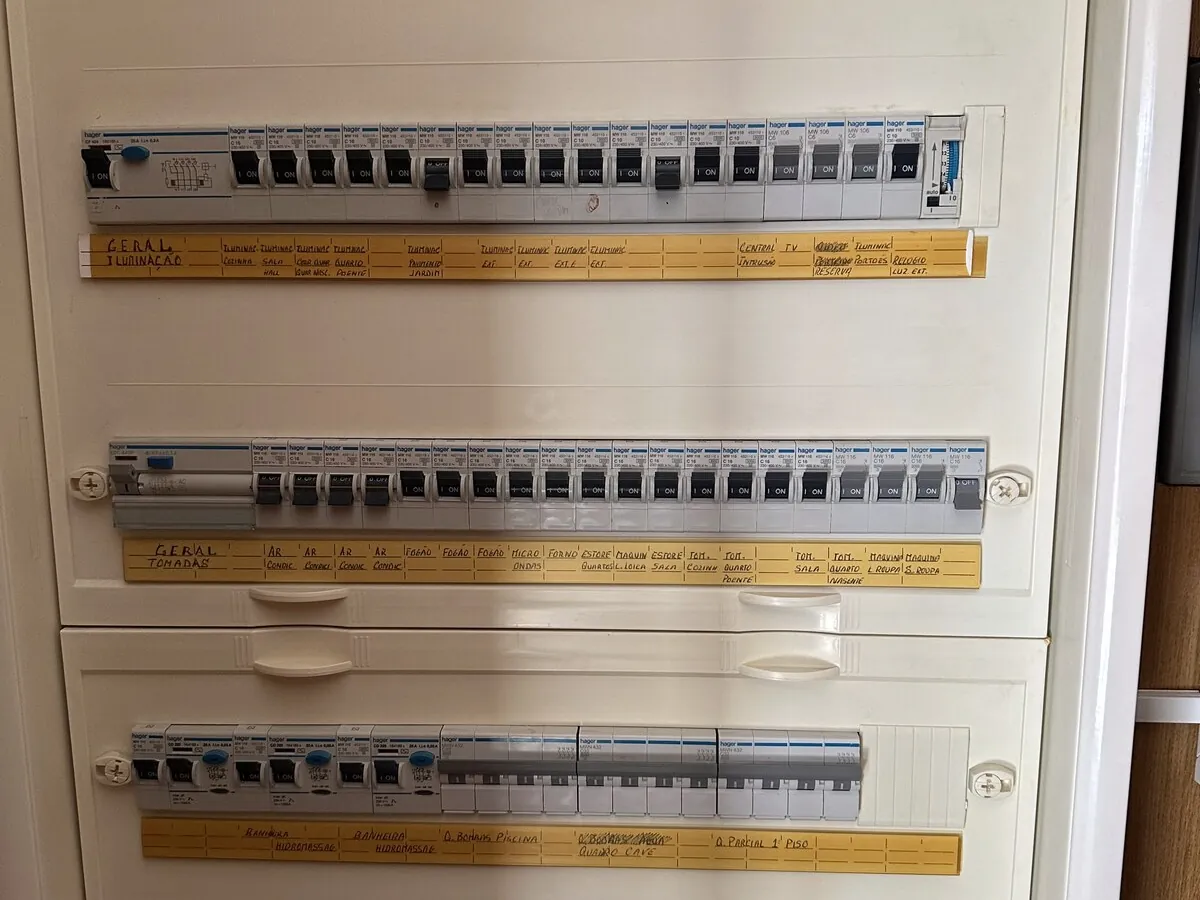
Electrics and systems. Every socket gets the charger. Every switch, every light point. Find the consumer unit and check every circuit is labelled. Run the AC or heating in both modes in every room — cold means cold, heat means heat, and nothing drips at the indoor units. Test the videoporteiro, the doorbell, the extraction fans (a sheet of paper should hold against the grille). And check the hot-water system — the cilindro or bomba de calor — is the one specified in your contract, not a cheaper substitute. Swaps happen more than you’d think.
Windows, doors, envelope. Open, close and lock every window and every door — twice. Listen for scraping; look for even gaps around frames. Check every pane for scratches and mark them with tape — glazing scratches are exactly the kind of thing that gets disputed later. Electric blinds: full travel, up and down, all of them. On terraces and balconies, water should fall away from the door threshold, not towards it — pour some from a bottle if you’re not sure — drains clear, balustrade solid when you push it. The front door should close and seal without a shoulder-charge.
Finishes last. Sight along walls and floors against the light — waves, patches and trowel marks show at a low angle that you’ll never see face-on. Tap tiles with a knuckle in a few spots per room; hollow means poor adhesion, and hollow tiles crack and lift. Grout and silicone continuous and clean, especially at wet corners. Doors with consistent gaps, no rubbing, handles firm. Open every drawer and every hinge in the kitchen and wardrobes, and switch on every appliance. Floors: no lifting edges, tight skirting, consistent joints.
Photograph everything as you go, tape on every defect, and get the lot in writing on the auto de receção — or a signed annex it references — before you sign anything. That document is the difference between a defect the developer owes you and a defect you own. I’ve written a full post on it; read that before your visit.
The defects that cluster in Portuguese new-builds
Every market has its patterns. The ones I keep meeting here: terrace and balcony thresholds with the fall towards the door — waterproofing detail done on paper, not in practice; hollow tiling, because big-format tiles laid fast don’t get full adhesive coverage; hot water that takes minutes to arrive because the routing was an afterthought; sockets left dead at the end of a circuit; blinds that jam; silicone that was clearly the last hour of the last day; and paint hiding everything until the first winter finds it.
What snagging can’t see — and what finds it
Here’s the honest limit of every checklist, including the one I give away: the expensive category of new-build defect is invisible at handover.
Missing or slumped insulation inside a finished wall shows on no walk-through — the wall is plastered, painted and perfect, and the A-class energy certificate says so on paper. You’ll pay for the gap every winter you own the apartment. Moisture already inside a screed or wall from a slow leak won’t surface as a stain for a year — by which time it’s your problem and your proof burden. Thermal bridging at slab edges and window reveals is nothing in July and a mould line in January.
A thermal camera finds all three in about ten minutes, while the paint is still fresh and — if you’ve timed it right — while the developer still hasn’t been paid your final 70 per cent. It’s the single biggest difference between an owner’s snag and a builder’s inspection, and it’s why our handover inspections lead with the thermal survey: the visible list gets the developer moving, but the invisible list is usually where the money is.
The other thing a builder brings isn’t equipment — it’s the judgement I mentioned earlier. Which cracks are settlement and which are structure. Which defects are cosmetic and which are the visible end of something behind the wall. A checklist can’t carry that; experience does.
Do it yourself, or bring someone in
If your budget says DIY: take the free checklist below, allow ninety minutes, test everything that moves, photograph everything, and get every item on the auto de receção before you sign. Done with discipline, that’s a genuinely worthwhile snag — far better than the twenty-minute tour most buyers accept.
If the sums involved say get it done properly: an independent handover inspection here costs from €590 + IVA against a purchase in the hundreds of thousands — thermal survey, every system tested under load, and the paperwork handled in both languages: your report in English within 48 hours, the snag list in Portuguese formatted for the developer, and a defect letter ready for your lawyer. Independent matters, by the way — the person checking the developer’s work shouldn’t be anyone who profits when the sale completes. No developers, no commissions, no referral fees is the whole point.
Either way: don’t do the twenty-minute version. It’s the largest purchase you’ll make, and the walk-through is the one moment the checking is nearly free.
The full builder’s checklist — everything above in walk order, English and Portuguese in one PDF, free:
Getting the keys to a new build?
We inspect it before the escritura or the auto de receção and give you a bilingual snag list for the developer to work through. Thermal imaging included. From €590 + IVA, report within 48 hours.
Book a handover inspectionWhat a handover inspection coversOr message Brad on WhatsApp. Same-day reply.
Completion inside the next couple of months? See how the inspection works: antipodeanporto.com/handover-inspection.