It’s the new trend in Portugal. It’s also where we see the unhealthiest homes.
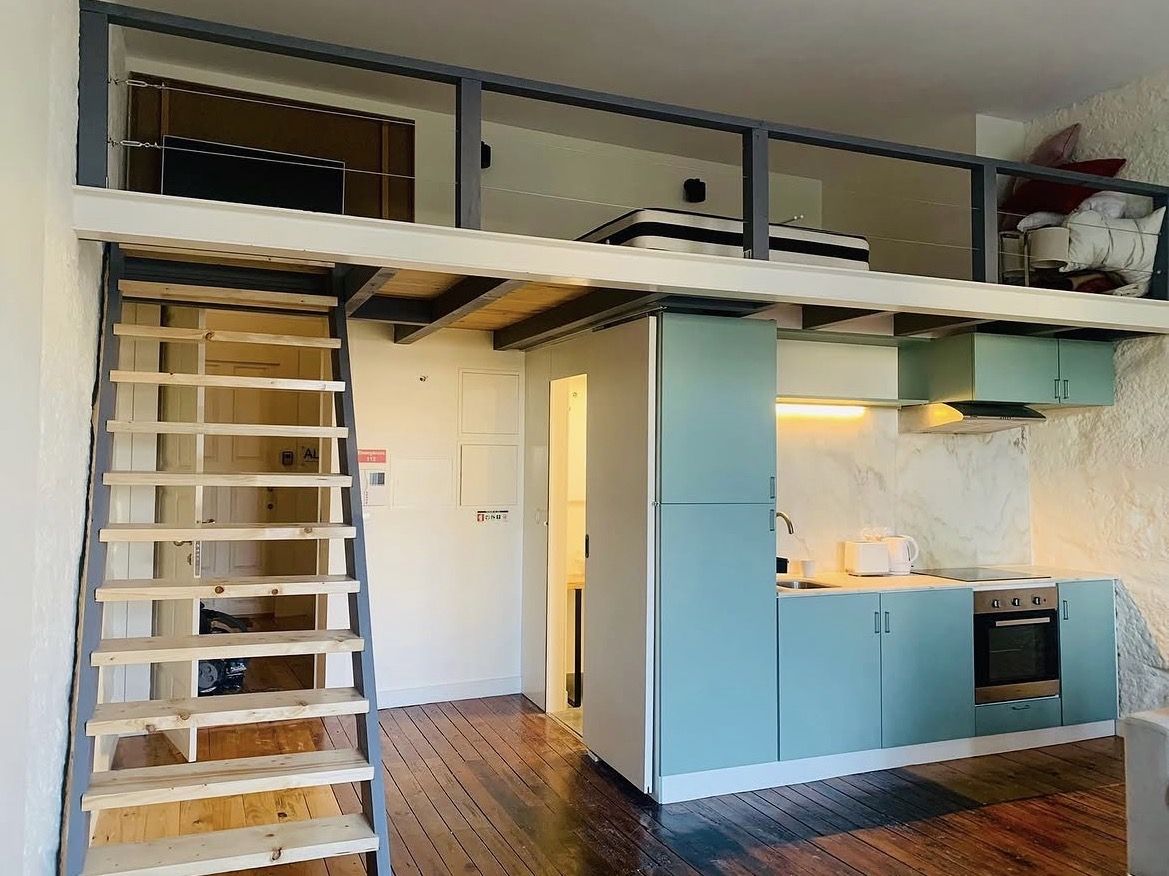
Buy a shop, an old office or a ground-floor space for a fraction of what a flat costs, turn it into a home, and you’re laughing. That’s the pitch, and right now it’s everywhere. With prices where they are and the 2024 licensing changes making it easier on paper, converting commercial space to residential has gone from rare to fashionable, first in Lisbon, now spreading through Porto.
The opportunities are real. So are the traps. And the traps are the kind you can’t see at a viewing, behind fresh plaster and a coat of paint. We get called to these conversions all the time, usually after someone has bought one, and the same problems come up again and again. The worrying part is that almost none of them get caught by anybody before the keys change hands.
The law made it easy. That’s the problem.
The 2024 Simplex Urbanístico reform brought in a simplified regime for changing a property’s use from commercial to residential. In the right zone you can now change the use of your fraction without needing the other owners’ agreement, and the process at the camara is lighter than it used to be. We covered what those changes mean for buyers in our piece on the 2024 building law.
Here’s the thing nobody says out loud: easier licensing does not mean a healthier home. The camara’s involvement at the end is light. In most cases the works are signed off on a builder’s declaration of responsibility, and the council has a short window to inspect if it chooses to. In practice, the things that actually decide whether a converted space is fit to live in are rarely looked at by anyone official. That job falls to you, or to whoever you get to check it before you buy.
What actually goes wrong
These are the problems we see on conversion after conversion. None of them show up in the photos.
No real ventilation, just air conditioning. This is the big one. A shop or office was never designed for people to sleep, cook and shower in. Cross-flow ventilation, air moving through the space from one side to the other, is what keeps a home dry and healthy. Most conversions have none. There’s one aspect, windows on a single wall, or no opening windows at all, and the “solution” is a couple of air conditioning units bolted on. Aircon is not ventilation. It cools the air and dries it for an hour, but it does not bring fresh air in or move stale, damp air out. You end up with a sealed box.
No mechanical ventilation where it’s needed. When a space can’t ventilate naturally, it needs a proper mechanical system, extraction in the bathrooms and kitchen, fresh air brought in, the moist air pushed out. Done properly that’s a healthy home. Skipped, which it usually is, the moisture from cooking, showering and breathing has nowhere to go. It lands on the coldest surfaces, and you get streaming windows and black mould in the corners within the first winter. We explain why this happens in our guide on why Portuguese houses are cold and damp.
Not enough natural light. Commercial ground-floor spaces are deep and they face the street on one side only. Push bedrooms and living space to the back and you get rooms that never see daylight. Beyond it being a grim place to live, Portuguese habitability standards exist for a reason, habitable rooms need real natural light and a window to the outside. Plenty of conversions quietly ignore this, carving bedrooms out of spaces that should never be bedrooms.
Rising damp and wet slabs, especially in basements. This is the one that catches people hardest. Basement and semi-basement conversions sit at or below pavement level, against wet ground, often on a slab with no damp-proofing under it because none was ever required for a store room or a garage. The ground is permanently feeding moisture up into the slab and through the walls. Tile over a wet slab and the damp doesn’t go away, it just comes up somewhere else. We see floors that are wet from below, walls damp to waist height, and owners who were told it was “just condensation.” It rarely is. Understanding where the water is actually coming from is half the battle, which is exactly what our piece on damp in Porto is about.
Services that were never built for living. A shop has commercial power and drainage for a sink and a toilet, if that. Turn it into a home and you’re adding a kitchen, one or two bathrooms, maybe a utility. That means new waste runs, new soil connections, and falls to the main drain that the original building may not have. Done on the cheap, the drainage is the first thing to fail.
Why you can’t rely on the paperwork
A conversion can have its change of use approved, a clean licence, and a declaration that the works were done properly, and still be a damp, airless, unhealthy home. The licence confirms the use is allowed. It does not confirm the slab is dry, the air moves, or the bedrooms see daylight. Those are building questions, not paperwork questions, and the only way to answer them is for someone who knows construction to go and look, before you commit.
That’s true for any purchase in Portugal, where there’s no seller disclosure and the agent works for the seller, which is why we always recommend an independent pre-purchase survey. On a conversion it matters more, not less. A normal flat has decades of proof that it works as a home. A conversion is a commercial space wearing a home’s clothes, and it has to be judged on whether the bones underneath were actually made fit to live in.
The straight version
Conversions can be brilliant. Some of the best-value homes in Porto right now are old commercial spaces done properly, with real ventilation, light brought in, and a slab that was tanked and dried out before a single tile went down. The difference between a great conversion and a sick building is entirely in the work you can’t see, and that work is exactly what no inspection by the camara will catch.
So before you buy one, get it looked at by a builder. We survey conversions across Portugal, tell you straight whether the space has been made genuinely fit to live in or just made to look like it, and put a real cost against anything that hasn’t. Book an inspection or message us on WhatsApp, and we’ll tell you what you’re really buying.
Buying a conversion — or thinking about one?
Before you sign on a shop, office or basement that’s been turned into a home, talk to us first — we’ll tell you whether it’s genuinely fit to live in or just dressed to look like it, and we’re the builder who can put right what isn’t. WhatsApp is the fastest way to reach us — we respond the same day, in plain English.
Message us on WhatsApp