A top-floor flat sells on light, views and nobody walking around over your head. What the listing doesn’t mention is that you’re the one living directly under the building’s roof. When that roof leaks, the water comes into your flat first, and the repair is decided by a condominium meeting you have one vote in.
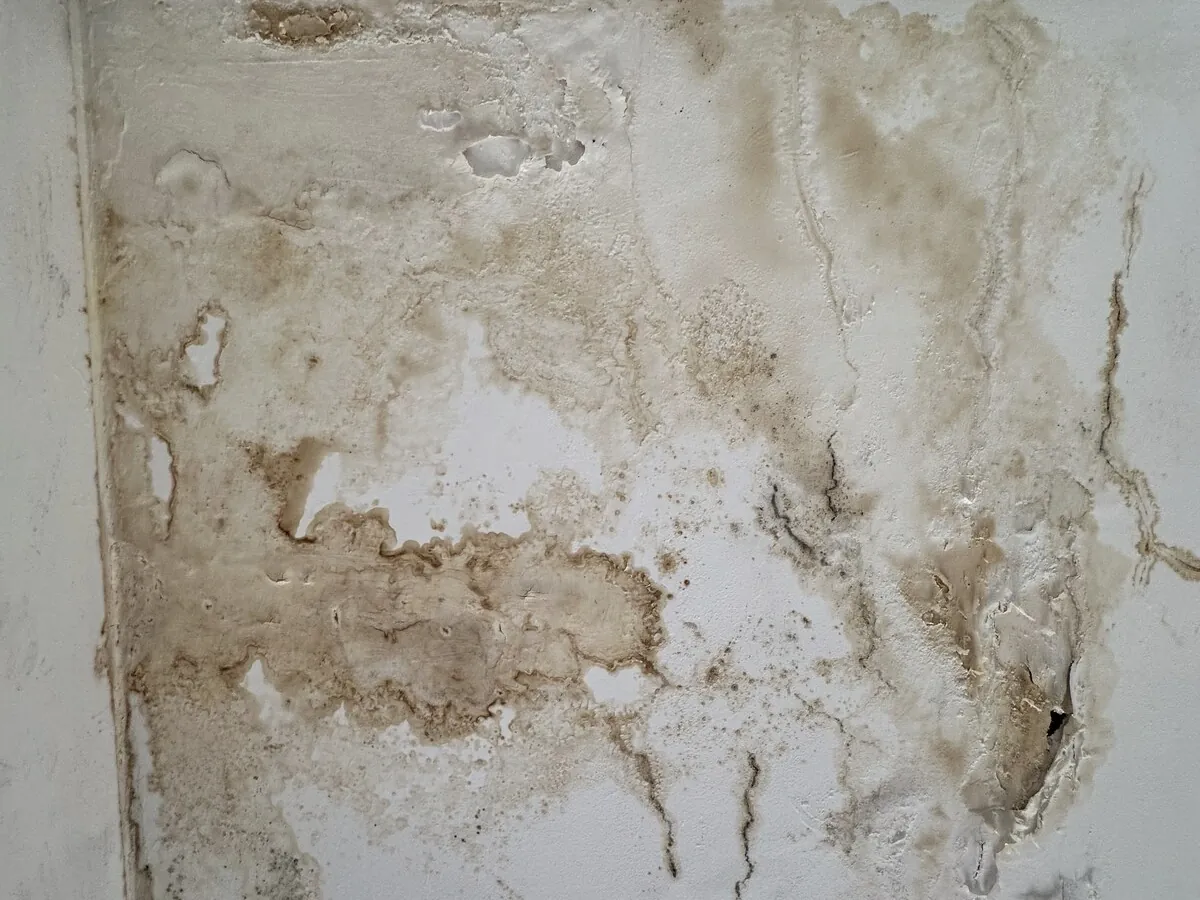
Two of the flats we inspected for buyers this year had the same story. Both looked well finished. Both had water coming in from the flat roof above. In one the owner said the leak had been fixed and the wall left to dry. In the other the paint on the veranda wall was bubbling under a bedroom window that had a water mark on the reveal. Neither problem was the buyer’s to fix directly, and both mattered more to the purchase than anything inside the flat.
The roof belongs to everyone, and the leak belongs to you
In a Portuguese apartment building the roof is a common part. Its repair is a condominium decision and a condominium cost, shared between the owners by permilagem: each flat’s share of the building in thousandths, set out in the título constitutivo da propriedade horizontal. Your share is the building cost times your permilagem, divided by a thousand.
On one of those flats the roof re-do was likely to run at €60 to €120 per m². On a 300 m² roof that’s roughly €18,000 to €36,000 for the building. A flat at 40‰ would carry about €720 to €1,440 of it. That part is manageable. What hurts the top-floor owner is the time it takes: a meeting, quotes, a vote, a contractor, and another winter of water in the meantime. The making good inside your flat is usually your own cost, and the condominium won’t move faster because it’s your ceiling.
A new covering doesn’t mean a fixed roof
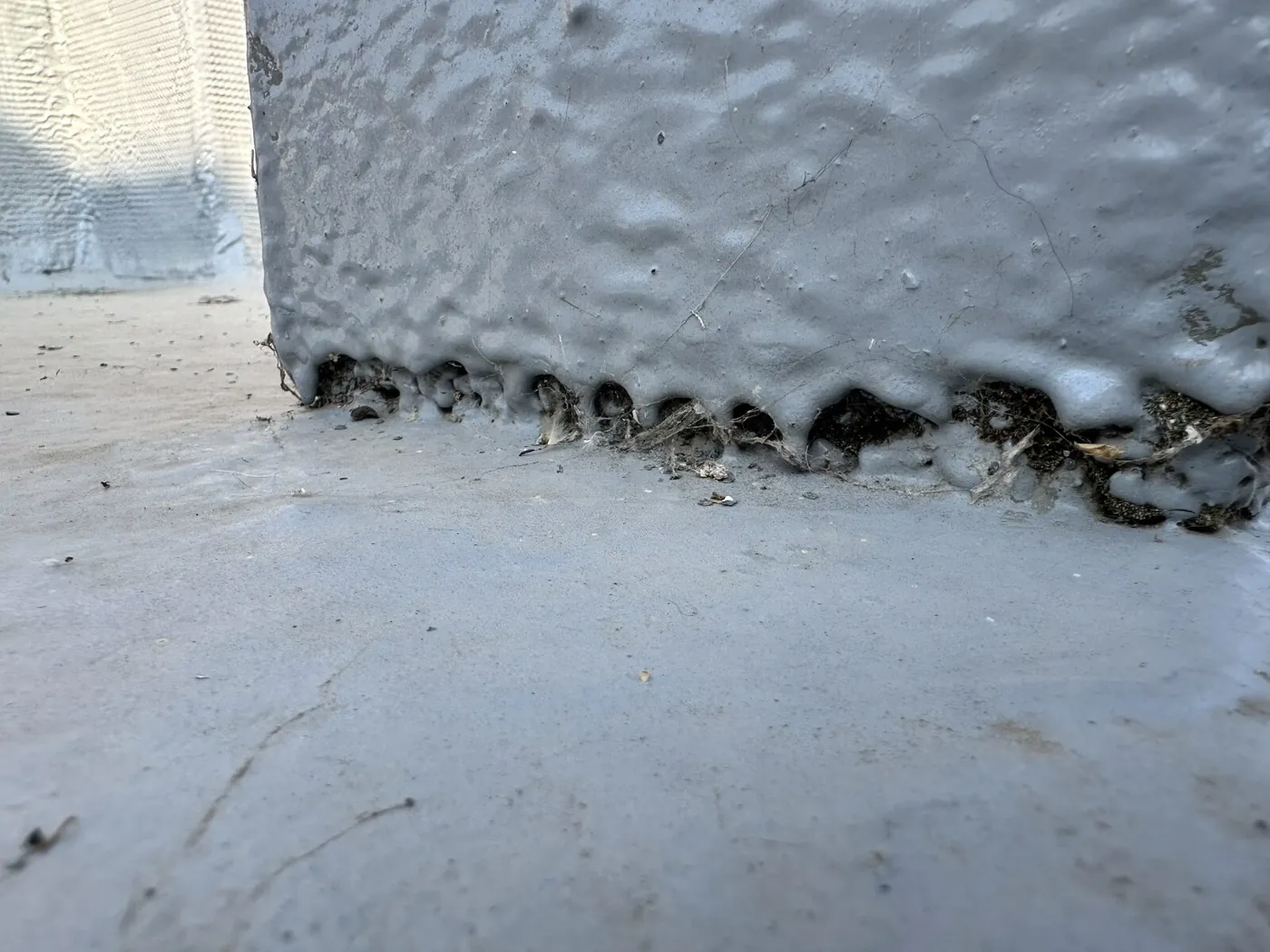
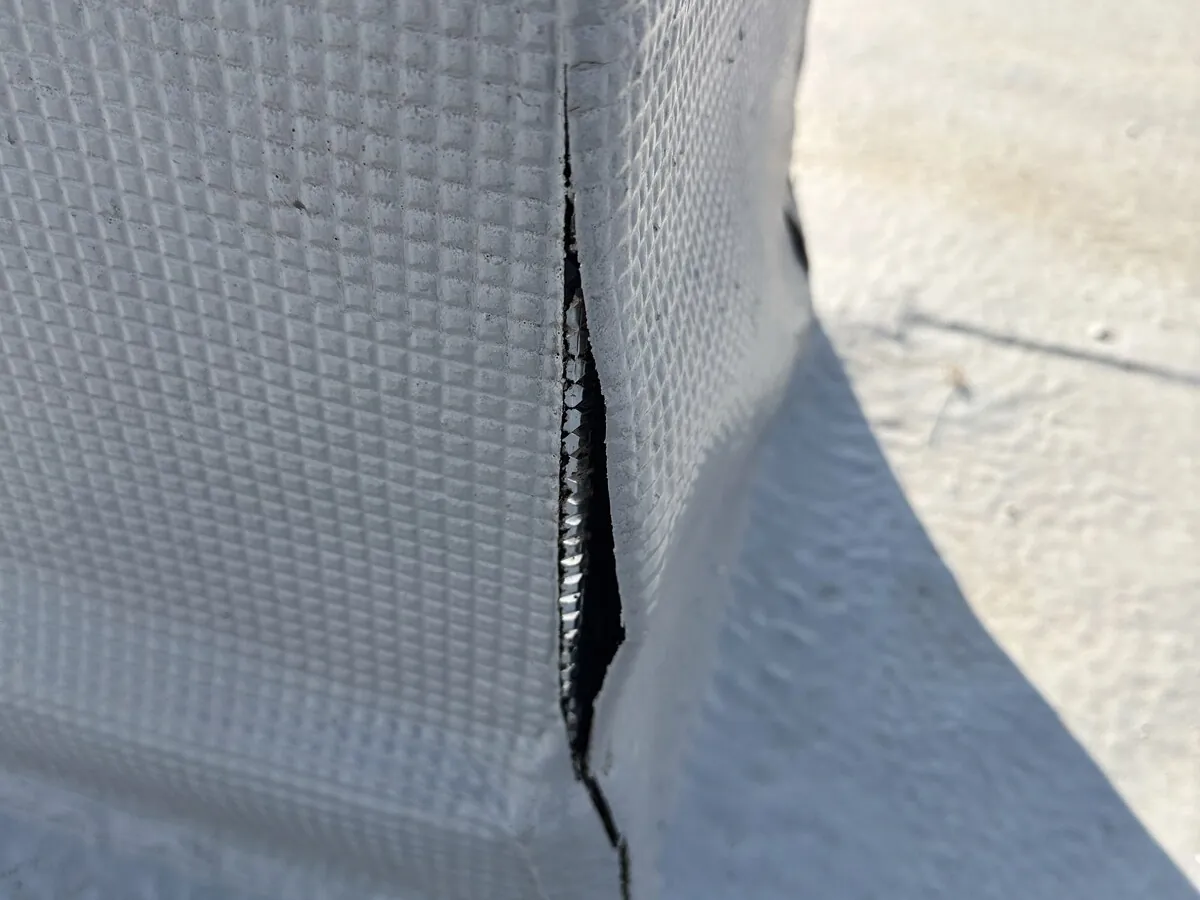
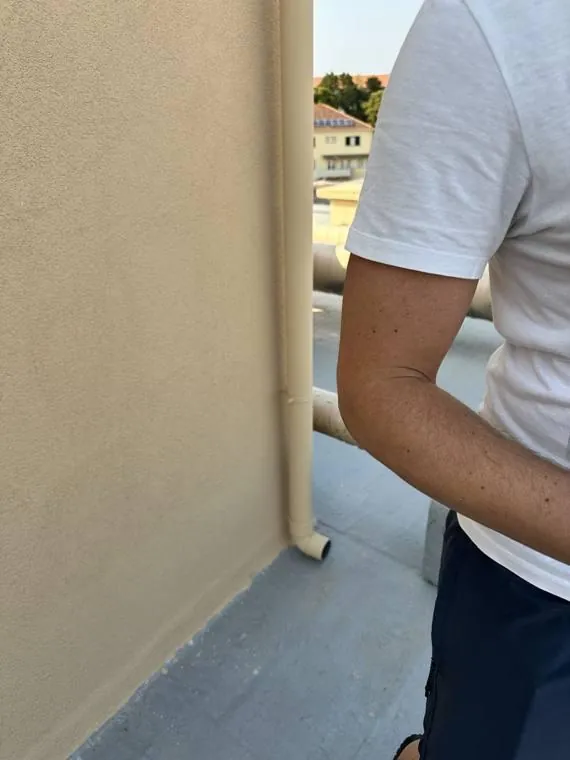
On the first flat the condominium had already paid for “waterproofing”. What had gone on was a thin liquid membrane rolled over the old covering. The reinforcement mesh was showing through the topcoat, it was cracking on the flat, and it was coming away at the base of the upstands. At the corners of the plinths it had split open with nothing bridging the joint.
A liquid membrane can be a good system. This one was under-built and badly detailed, and on a flat roof the detail is the job. Every corner and upstand needs reinforcing fleece bedded in two coats and dressed about 150 mm up the wall. Without that, water finds the corners within a season or two.
The details that get left out
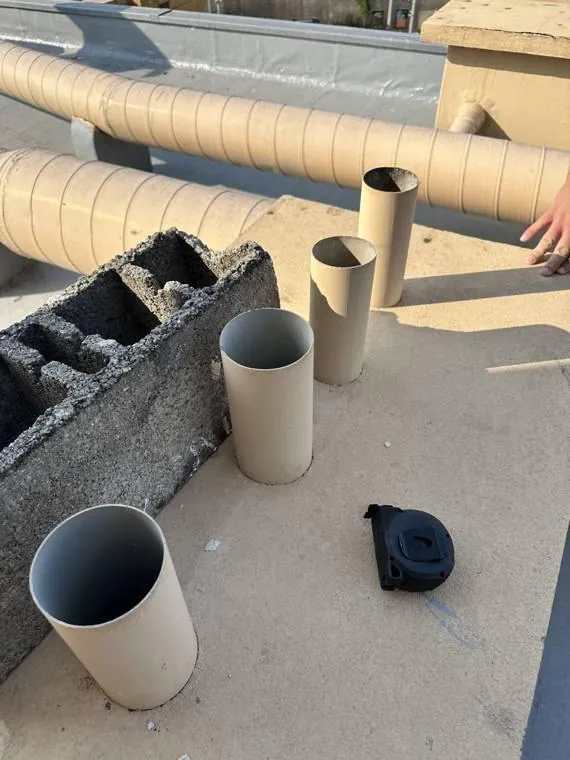
The same roof had a list of smaller omissions that all fed the leak. Vent pipes had been cut off as open stubs with no terminals, so rain ran straight down inside the stacks. The hollow concrete block around them had never been sealed. Capping stones sat on cracked bedding with no drip. The new zinc cappings looked tidy, but the joints had a cover piece laid over them instead of being welted or soldered.
And the downpipe from the small roof over the stair access discharged through a shoe straight onto the middle of the main roof, instead of into an outlet. A whole roof’s worth of water was being dumped onto a covering that was already struggling, with ponding marks across the deck to show for it.
What it looks like from inside the flat
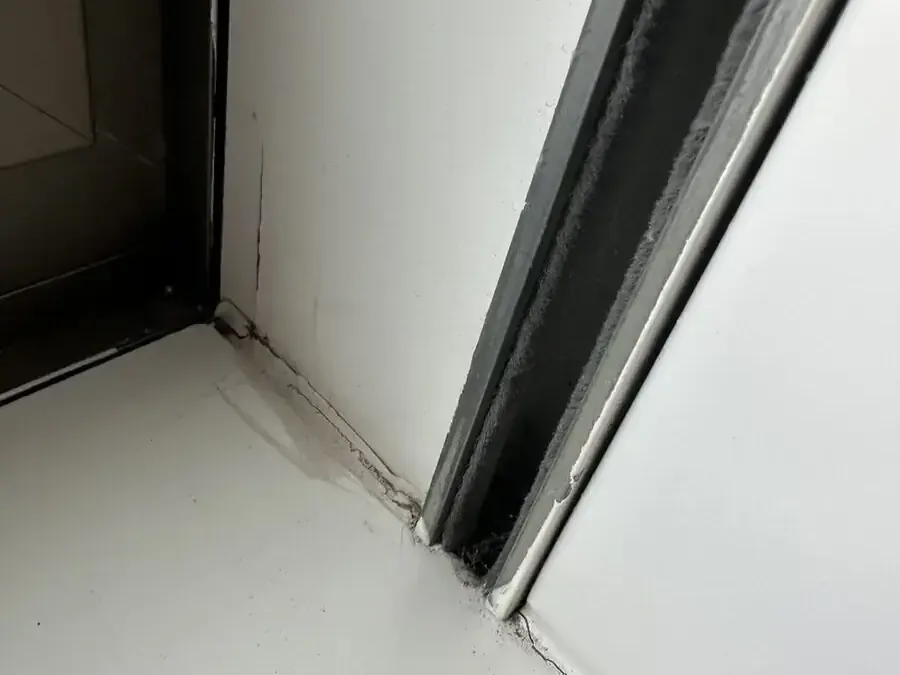
From inside you rarely see the roof problem itself. You see where the water ends up after tracking down through the wall: a water mark on a window reveal, paint bubbling on the wall nearest the terrace, a brown stain round a ceiling light, blown plaster near the parapet. A fresh coat of paint hides all of it for a viewing. A moisture meter and a thermal camera don’t care about the paint, which is why we use both on every top-floor flat.
What to ask for before you sign the CPCV
These are the documents that turn a roof problem into a number you can negotiate with:
- The condominium minutes for the last three years. Look for leaks reported, roof works discussed, quotes received and anything voted on.
- Whether there’s a quota extraordinária (special levy) agreed or likely, and whether the reserve fund can cover it.
- Your flat’s permilagem, from the título constitutivo.
- If the roof was recently redone, the product data sheet and the specification it was meant to be done to, and whether the contractor is still under warranty.
If the original contractor can be made to come back under warranty, the buyer’s share can end up at nothing. That’s why the paperwork is worth chasing before you’re committed.
What we’d tell a buyer
A leaking roof over a top-floor flat isn’t usually a reason to walk away. It’s a reason to get the facts first, then decide what the flat is worth. On one of these purchases the buyer’s own costs for cutting back, drying out and replastering came to €3,500 to €7,000, with the roof itself sitting with the condominium. On the other the internal making good was €600 to €1,400 once the building fixed the leak at source. Both were fair grounds to negotiate, and both buyers went in knowing what to ask the condominium.
Our pre-purchase inspection covers the flat and what we can safely see of the roof and common parts, with photos, readings and repair costs in your inbox within 48 hours. From €490 + IVA. Read a sample report to see the format.
Looking at a top-floor flat?
Send us the listing and your CPCV date. We’ll confirm the fee before you book. WhatsApp is the fastest way to reach us and we answer the same day.
Message us on WhatsApp