It starts with a quiet week. Then the replies get shorter, then they stop, and one Monday nobody turns up. You ring and it goes through. You ring again on Thursday and it doesn’t.
If that is where you are, two things are worth saying before anything else. You have not done something uniquely stupid, and you are a long way from being the only one — we get called about this more than we used to. And the fastest way to lose more money is to sit still and hope he comes back. Moving quickly is not the same as panicking.
What actually happens when a contractor walks
It is rarely dramatic and almost never announced. In most cases the money has run out on his side. He has been paid ahead of the work on your job, which is normal in Portugal and is a large part of the problem, and he has spent it finishing somebody else’s. Now he needs a deposit from a new client before he can afford to come back to yours. Sometimes the company is genuinely folding, sometimes it is closer to deliberate, and from where you are standing those look identical.
Here is what it leaves you holding.
You have paid for more than exists. Nearly always. Payment schedules here are commonly front-loaded and rarely tied to a stage anyone independent inspected, so by the time work stops there is usually a gap between what has left your account and what is standing on site. That gap is the number everything else hangs off, and almost nobody knows it at this point.
The licence didn’t stop when he did. If the works run under a licença de obras or a comunicação prévia, there is an execution period attached to it with a date on it. That clock keeps running through the months your job sits still. Extensions exist and are usually granted, but they have to be applied for, and it is your name on the process rather than his. Check the dates on your own consent, and where you are not certain, ask the Câmara directly rather than working off what somebody told you at the start.
There may be nobody technically responsible for it. Licensed works have a named diretor de obra — a qualified technician carrying responsibility for how the thing is executed. If yours was appointed by the contractor and the contractor has gone, you may be sitting on a building site with no responsible technician attached to it. That reads like a filing issue right up until the end of the job, when it turns into a licença de utilização issue and stops you using or selling the building.
The half-built work is going backwards. Open roof, exposed blockwork, chased walls waiting on first fix, screed with nothing over it, a scaffold you are still being invoiced for. In the north, a winter on a stopped job does real and expensive damage. Timber that was fine in September is not fine in February.
The first week
Stop paying. That sounds too obvious to write down, and then you meet the people who kept a standing transfer running for two months because they were trying to keep him sweet and get him back. If the work has stopped, the money stops.
Get the site dry and shut. This is the one piece of spending that is worth doing before you understand anything else. Sheet the roof, board the openings, change the locks if the only keys are with a crew that isn’t coming back. It is a small bill against what a wet winter costs you.
Then write it down while it is fresh. The last day anyone worked, who said what and when, every message and voice note kept rather than deleted. Photograph the whole site — every room, every elevation, the meters, the material stacks. Once anyone else touches the building, that moment is gone for good.
Put the paperwork in one folder: contract, every invoice, every proof of payment, the licence or comunicação prévia, the drawings, the specification if you ever got one. Half the people who ring us cannot immediately say what they signed. That is not a criticism. It is what happens when the documents arrive in a language you don’t read, across nine months of email.
Speak to a Portuguese lawyer rather than a Facebook group. If there is money in dispute or a contract to enforce, that is legal work and it belongs with someone qualified. But a lawyer with no technical position to argue from is working with one hand tied. The strongest thing you can hand them is an independent record of what was built, what it was worth and what was paid for it.
And do not let the site be stripped. Materials you have paid for have a habit of leaving in the back of a van while everyone is still being polite about whether the contractor is coming back.
Running a job from overseas? Our project management puts someone on site who works for you, not the builder.
What an independent assessment actually covers
The point isn’t the document. It is replacing a fog of assumptions with a position you can act on, and it splits three ways.
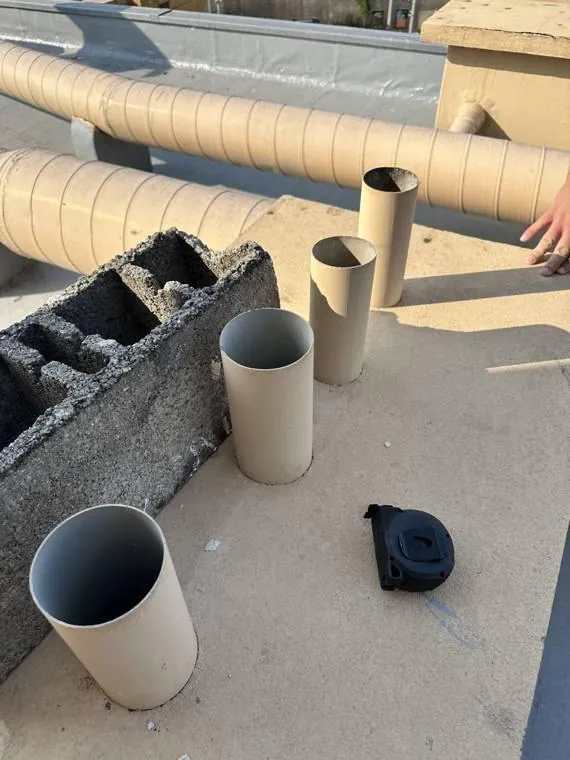
The build itself, measured. What is physically in place, room by room and element by element. What is built to standard and what has to come out, which on abandoned jobs is usually a smaller proportion than the owner fears and never zero. What has been tested or certified — electrics, plumbing, anything structural — and what has been closed up with no evidence behind it. That last category is the expensive one, because work you cannot verify has to be treated as work that might be wrong.
The paper, reconciled against it. Contract scope against invoices, invoices against payments, and all of it against what is actually standing there. Licence status and dates. Who is named as diretor de obra and whether that appointment survives the contractor leaving.
Then the position, in writing. What is salvageable. What the remaining works cost to complete properly. Where the money sits between the two parties, stated as a technical fact rather than a legal opinion. Your lawyer takes that and does what lawyers do with it.
How the job gets finished
Once you know where you stand there are two routes, and both start from the same document.
You can tender the remaining works. That means scoping what is left properly, taking it to contractors who have been checked rather than recommended, and levelling the prices that come back so you can see why they differ. Worth knowing in advance: any decent builder pricing somebody else’s part-built job will load it. He is inheriting work he didn’t do and can’t see, and he will price that risk. A documented, opened-up, verified position is what takes most of that premium back out of the number — which is the commercial reason to do the assessment before the tender, not after it.
Or it gets picked up directly and finished by teams already under one roof, which tends to suit the smaller jobs and the owners who have simply had enough of managing anything.
Either way, the part worth insisting on from here is the part that was missing the first time. Payments tied to stages somebody independent has actually inspected. Nothing released ahead of the work. It is not a sophisticated idea and it is the single thing that would have stopped most of these jobs going the way they went.
Stalled or abandoned project? We assess where the job stands, reconcile the paperwork against what is built, and either tender the remaining works or finish them — independently, with no commissions from anyone. See Build Rescue, or talk to us on WhatsApp. We work the length of Portugal and we answer the same day.
Related reading: why three builder quotes are never comparable, how to pay a builder in Portugal and who you are really hiring.
Building or renovating from abroad?
We work for you, not the builder. We vet builders, tender the work and run the job, and we pick up projects where the contractor has walked off.
How our project management worksTalk to us about your projectOr message Brad on WhatsApp. Same-day reply.