Everybody tells you to get three quotes. Nobody tells you the three quotes won’t be comparable, which makes the advice close to useless on its own. You end up with three numbers on three pieces of paper, no way to tell why they differ, and a strong pull towards the lowest one — which is very often the one that has quietly left the most out.
Holding a quote now? Quote Check: what’s in, what’s missing, how the payments are set up. Written notes in 48 hours, €220 + IVA. Rather not run the tender yourself? Project management sources and vets the builders and manages the job.
They’re not pricing the same job
Here is what actually happens when you send the same property to three builders and ask for a price. The first walks it, assumes the windows are yours to supply, prices a mid-range tile and allows nothing for the retaining wall at the back because you didn’t mention it. The second includes the windows, prices the cheapest tile in the merchant’s book and assumes the electrics are a rewire. The third assumes the electrics are a patch-up, includes scaffolding you thought was included in the first two, and puts a number against the retaining wall because he actually looked at it.
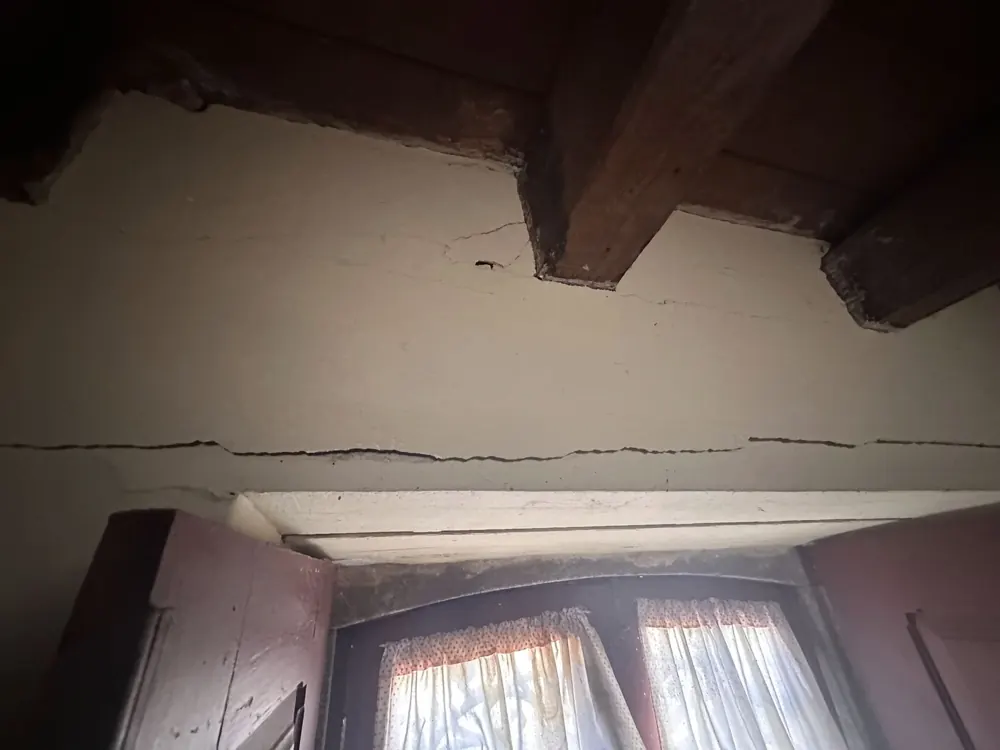
Now you have three quotes that differ by tens of thousands of euros, and every single one is honest. Nobody has done anything wrong. They have simply priced three different jobs, because nobody told them precisely which job to price. You are not comparing prices. You are comparing assumptions.
Why the cheapest quote is usually the emptiest
This is the part that costs foreign owners the most money. In an unpriced, unspecified job, the way to be cheapest is to assume the least. The builder who allowed for the retaining wall looks expensive. The one who didn’t notice it looks like a bargain. You pick the bargain, and the retaining wall arrives four months later as a variation, at a price nobody is competing for any more, because you’ve already signed and the scaffolding is already up.
Variations are where the cheap quote catches up with you, and they’re priced in a completely different market to the one you started in. Before you sign, you have three builders wanting the work. After you sign, you have one builder who knows you can’t easily replace him. The gap between those two positions is your money.
Already holding a quote? Our quote check finds the gaps before they turn into extras. €220 + IVA.
The fix is a tender package, and it isn’t complicated
The whole problem disappears the moment somebody writes down exactly what is being built and makes every builder price that. In the trade it’s called a tender package. It doesn’t need to be an architect’s bound volume. It needs to be a document that removes the guesswork:
- The scope, room by room and element by element
- The standard the work is held to
- Drawings, where drawings exist
- The finishes, specified — actual products, not “good quality tile”
- What’s included and what explicitly isn’t
- Who supplies what
- Stage hold-points and how the work gets signed off
- Provisional sums for anything genuinely unknown
Give that to three builders and something interesting happens. The quotes come back within a sensible range of one another, and where they differ you can see exactly why — one has a cheaper labour rate, one has priced more prelims, one has loaded the risk because he doesn’t like the access. That is a real comparison, and now the low number means something.
Specification is the bit almost everyone skips
If I had to pick the single line that causes the most argument on Portuguese jobs, it’s an unspecified finish. “Kitchen” can mean four thousand euros or forty. “Bathroom tiling” can mean a stock white square metre or a hand-made zellige with a four-week lead time. Until somebody writes down which one, every builder will assume the cheap end — because assuming the expensive end loses him the job.
So pinning down the finishes isn’t decoration or a nice-to-have. It’s cost control. It’s what turns a quote into a price.
Levelling the quotes when they come back
Even with a good package, quotes come back in different shapes. Levelling means putting them all on one sheet, line against line, and adjusting for the differences so you’re comparing like with like — adding in what one has excluded, stripping out what another has included twice, and flagging the lines that look too thin to be real.
That last part matters. A line that’s obviously underpriced isn’t a saving, it’s a future argument. Either the builder has misread the scope, in which case he’ll want more money later, or he’s bought the job intending to make it back on variations. Both end the same way.
What to do with all this
If you’re managing your own project, write the scope down in as much detail as you can bear before you ask anyone for a number, specify the finishes, state what you’re supplying, and insist every builder prices the same document. You’ll get a better result than 90% of foreign owners do.
If you’d rather not — or you’re doing it from another country, in a language you don’t argue in — that’s the job we do. We scope the works, write the tender package, source and vet the builders, run the tender, level the quotes onto one sheet and tell you plainly who to use and why. We take no commission from any of them.
Rather not do the choosing yourself? Builder sourcing, vetting and a competitive tender are the front end of our project management. You hold the contract, we answer only to you, and we take nothing from the builder.
Got a builder’s quote on the table?
Send it over with any drawings. We go through what’s included, what’s been left out, where the quantities and allowances look light and how the payment stages are set up. Written notes within 48 hours, with the questions to put to the builder before you sign. €220 + IVA; each extra quote compared is €120.
Haven’t bought yet? Start with the pre-purchase inspection, which prices the work before you commit.
Or message Brad on WhatsApp. Same-day reply.