Most agents in Portugal are decent people doing a job. The job is selling the house. They’re paid when it sells, usually by the seller, and they don’t get paid if it doesn’t. None of that makes them dishonest. It does mean nobody in that transaction is checking the building or the paperwork for you unless you put them there. After a lot of inspections for foreign buyers, these are the gaps I see most often.
Who the agent actually works for
In Portugal the commission is normally paid by the seller, often around 5% plus IVA. The agent may have signed an exclusive with the seller, and the same agency can end up dealing with you and the seller at once. That’s legal and it’s common. Just be clear in your own head that “my agent” usually means the seller’s agent being helpful to you.
Agencies have to be licensed by IMPIC and carry an AMI number. It should be on their website and their paperwork, and you can check it. If it isn’t there, ask why.
Be careful with the people they recommend
Agents often have a lawyer, a builder, a bank contact and sometimes an “inspector” they like to send buyers to. Some are very good. The question to ask is simple: does this person get anything from the agency, or from the sale going through? A lawyer or inspector who depends on the agent for work has a reason not to slow the sale down. Pick your own. We take no commissions or referral fees from agents, builders or anyone else, and that’s the standard you should hold everyone on your side to.
Looking at a property with this kind of problem? Our pre-purchase inspection finds it and prices it before you sign. From €490 + IVA.
What the listing leaves out
Listing photos are taken on a sunny day with the dehumidifier hidden. The bigger gaps are on paper.
Areas that don’t match. The m² in the advert often includes terraces, a garage or an attic. Compare it with the caderneta predial, which splits private area from the rest. When the caderneta is noticeably smaller than what you’re standing in, something was added.
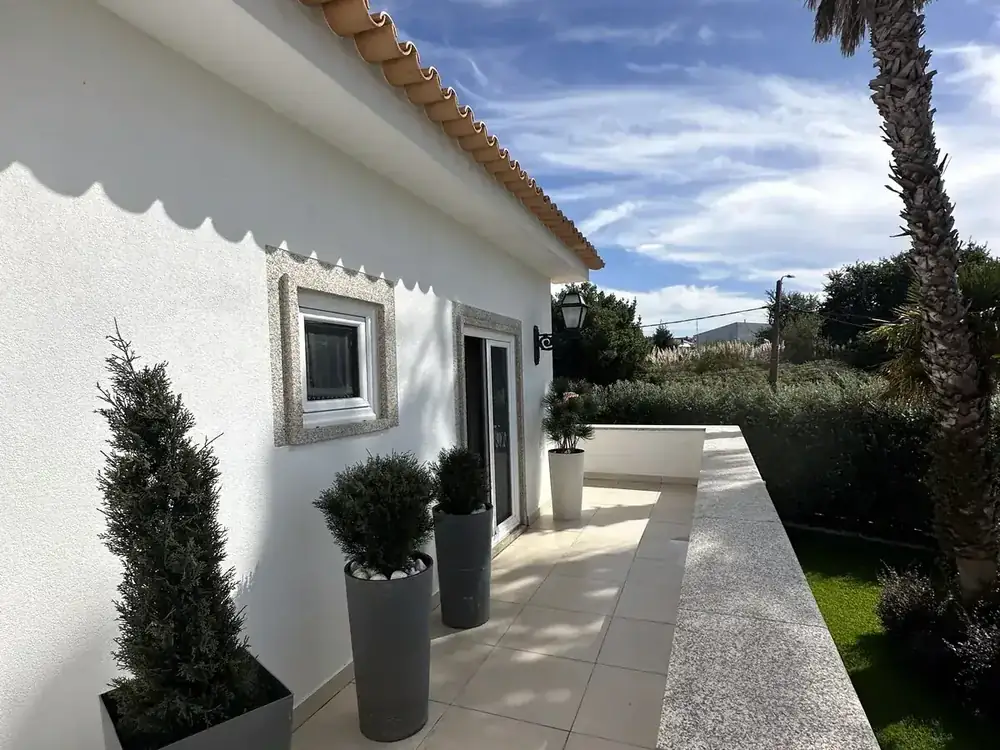
Additions without a licence. A closed-in balcony, a veranda roof, a converted garage or an attic bedroom are the usual ones. Since DL 108/2026 the deed has to say whether a title of use exists, but it still doesn’t say whether the building matches it. I’ve covered that in what DL 108/2026 changed.
Known problems. A leak that was patched, a dispute with the neighbour over a boundary wall, a condominium about to vote on a facade job. Sellers aren’t always asked, and agents aren’t always told.
The documents to ask for, and what each one tells you
Your lawyer will pull most of these. Ask for them early anyway, because the gaps show up when you read them side by side.
- Certidão permanente (land registry). Who owns it, and any mortgage, lien (penhora) or other charge on it.
- Caderneta predial (tax record). Areas, rooms and the tax value. Check it matches the house and the registry.
- Título or autorização de utilização, with its number and date, and if you can get them, the approved plans from the Câmara.
- Certificado energético. Required for the sale. A low rating usually means cold walls, poor windows and no ventilation.
- Ficha técnica da habitação on homes built since 2004, if it exists.
- For an apartment: the condominium’s statement of what the flat owes, which the seller has to produce for the deed, plus the last two or three years of minutes and the reserve fund balance.
- Tenancies. Whether anyone lives there on a contract. A sitting tenant can have a right of first refusal, and in some areas so can the Câmara.
None of these tells you the condition of the building. They tell you what was registered, taxed and licensed. The building itself is a separate check.
Apartments: you’re buying part of the building
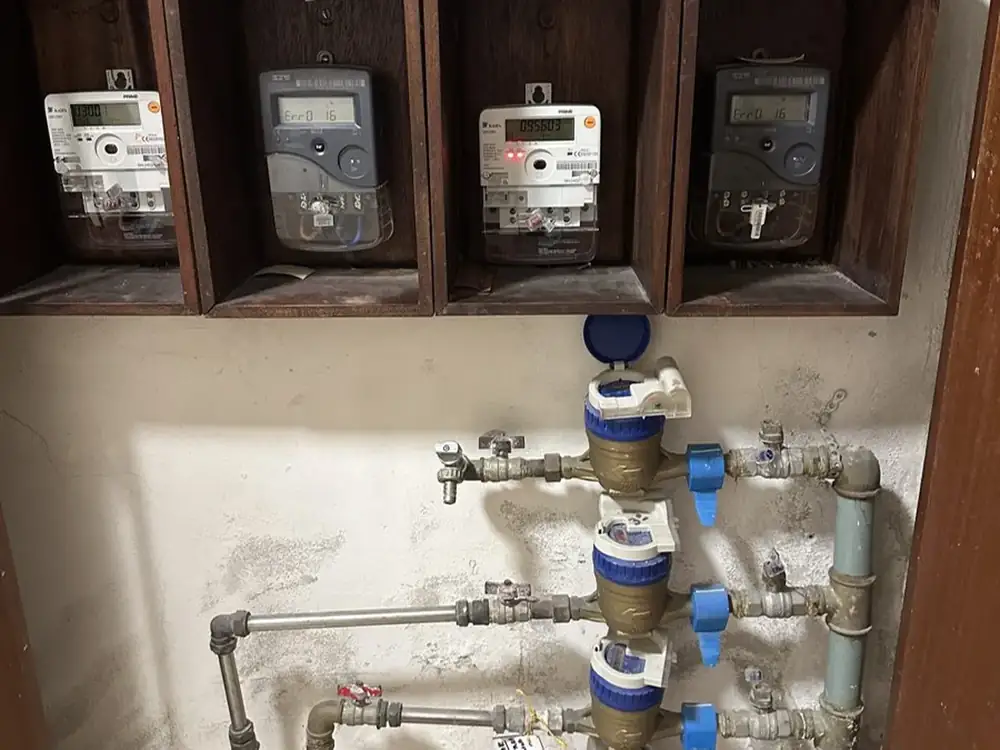
The flat can be immaculate and the building can be due a new roof. In a condominium you pay your share of that, by permille, whether you voted for it or not. Read the minutes for works that have been discussed and put off, and look at the common parts yourself: roof, facade, stairwell, the light well, the meters. More on this in condominium reserve funds.
Rural property and quintas
This is where the paperwork gets most tangled. A quinta is often several registry entries, some urban (urbano) and some rustic (rústico). You can’t usually build on rustic land, and if the land is in REN or RAN, the protected ecological and agricultural reserves, even an outbuilding can be off the table. Check what the municipal plan (PDM) allows before you fall for the barn you’re going to convert.
Boundaries on the ground often don’t match the registry. In many municipalities rural land is now being mapped through BUPi, and a surveyor (topógrafo) is worth the money where the edges matter. Then there’s water and drainage: a well instead of mains, a septic tank nobody has emptied in years, a right of way across someone else’s field. Agents rarely bring these up unprompted. See buying a quinta for the building side.
The pressure to sign quickly
“There’s another offer.” “The seller wants the CPCV signed this week.” Sometimes it’s true. Either way, the CPCV is where the deposit goes down, usually as a sinal: walk away and you lose it. Once you’ve signed, your leverage on price is mostly gone. If the timetable doesn’t leave room for an inspection, ask your lawyer to make the CPCV conditional on one. What to check before you sign the CPCV goes through it.
Who you want on your side
Your own lawyer. A lawyer (advogado) registered with the Ordem dos Advogados, or a solicitador, who works for you and is paid by you. They do the legal due diligence: the registry, charges, licensing, tenancies, the CPCV and the deed. Agree the fee in writing before they start.
Your own builder or inspector. Someone who knows how Portuguese buildings are put together and goes through this one before you sign: roof, damp, structure, electrics, plumbing, drainage, and the common parts if it’s a flat. You want a cost range against every real problem, so you know what matters to the price and what’s maintenance. That’s what our pre-purchase inspection does, and if you’re still choosing between two or three places, Property Advisory covers all of them.
For rural land, a surveyor as well. For a big renovation, an architect early on, before you’re committed.
The lawyer and the inspector cover different ground. The lawyer can tell you the extension isn’t licensed. Neither the lawyer nor the agent can tell you the roof needs replacing.
A sensible order
- Engage your own lawyer before you make an offer.
- Ask for the documents above as soon as you’re seriously interested.
- Get the building inspected before the CPCV, or make the CPCV conditional on it.
- Take the findings back to the seller with costs attached.
- Sign once the numbers and the paperwork both make sense.
It adds a week or two, and it’s the cheapest part of buying a house here.
This is a builder’s summary from our own work with buyers, not legal advice. Your lawyer handles the legal due diligence and the contracts.
Buying a place in Portugal?
We go through it before you sign: roof, damp, structure, electrics and plumbing. Every finding gets a cost range, and so does the renovation you’re planning. From €490 + IVA, written report within 24–48 hours.
Book a pre-purchase inspectionSee a real reportOr message Brad on WhatsApp. Same-day reply.