You stand in the yard, there’s a fig tree, the view runs down the valley and the agent is telling you it needs “a bit of work”. The price looks like a joke next to Lisbon. Everyone who has ever bought a quinta has stood in that exact spot and felt that exact thing. Then they buy it and find out the house isn’t where the paperwork says it is.
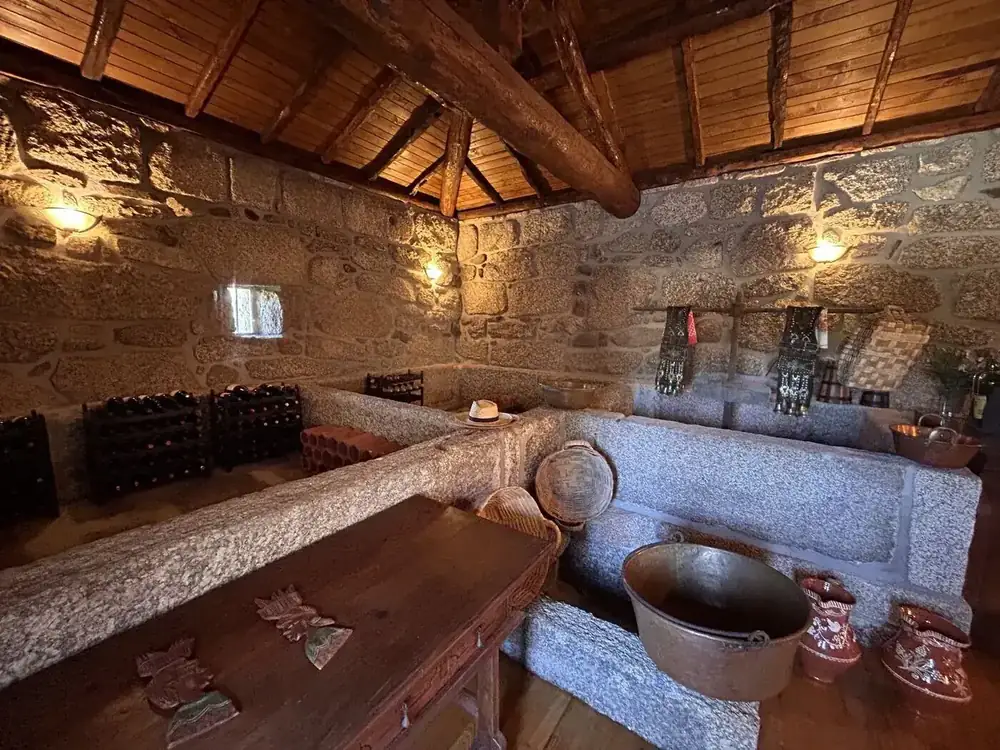
I’ve built across Australia, the UK and now Portugal, and rural property here breaks in ways a city apartment never does. Not because Portugal is dodgy. Because the countryside was never properly mapped, and a lot of what’s written down was written down by hand, a long time ago, by someone describing a field in terms of who owned the next one along.
Here’s what actually goes wrong.
The land might not be the land
Portuguese rural property lives in two separate systems that routinely disagree with each other. There’s the land registry at the Conservatória, which says who owns it. And there’s the tax register, the caderneta predial at Finanças, which says what it is and how big. Neither one was built to be accurate about boundaries, and for large parts of the north and centre the country was never cadastred at all.
So you get a plot registered at 4,000 square metres that walks out at 6,800. Or the reverse, which is worse, because you’ve paid for land you don’t own.
The state has finally moved on this. BUPi, the Balcão Único do Prédio, lets you georeference a rural or mixed plot properly and tie the registry to real coordinates. A georeferenced graphic representation is now required in the deed that transfers rural and mixed property. Not optional. Required.
Worth knowing today: the BUPi process, the georeferencing and the registry fees that go with it, is free until 30 September 2026. After that it isn’t. If you’re buying rural land here, or you already own some and never did this, that’s a hard date on the calendar.
The title problems nobody raises at the viewing
Four of these come up again and again.
Undivided inheritance. Herança indivisa. Grandad died, the property passed to seven children, three of them are in Brazil, one won’t speak to the others and nobody ever formalised the split. Every heir has to sign. One holdout and there is no sale, and you can be six months and a lawyer’s fee into it before that surfaces.
Property that was never registered. Prédios omissos. The family has farmed it for ninety years, everybody in the village knows it’s theirs, and there is no registry entry at all. That’s fixable, but it’s a process with a timeline, and it isn’t a thing to discover after you’ve signed the CPCV.
Adverse possession. Usucapião. Somebody else has been using part of your land, openly, for long enough to have a claim on it. That access track the neighbour uses. That corner where his olives are.
Pre-emption rights. Direito de preferência sits with various parties depending on the property, and if it applies and wasn’t properly notified, a sale can be unwound after the fact.
None of that is a builder’s job. All of it is a lawyer’s job, and I’ll say plainly that you should not buy rural property in Portugal without an independent one. Not the agent’s recommendation. Yours. What I can tell you is which questions to put in front of them, because the ones that catch people out are boring, specific and easy to skip.
Looking at a quinta with any of this going on? Our pre-purchase inspection finds it and prices it before you sign.
Boundaries described by men who are long dead
Old rural descriptions don’t use coordinates. They use confrontações. North: land of Manuel Ferreira. South: the road. East: the stream.
Manuel Ferreira died in 1974. His land got split three ways. The stream moved after they cleared upslope and now runs eleven metres east of where it used to. The road was widened.
That’s your legal boundary. That’s what you’re buying.
Walk it. Walk the whole perimeter with the plan in your hand and somebody who can read it, and do it before you commit rather than after. Half the boundary disputes I’ve seen would have been obvious in forty minutes on foot.
The ruin that can’t be rebuilt
This is the expensive one, and it’s where people lose the most money.
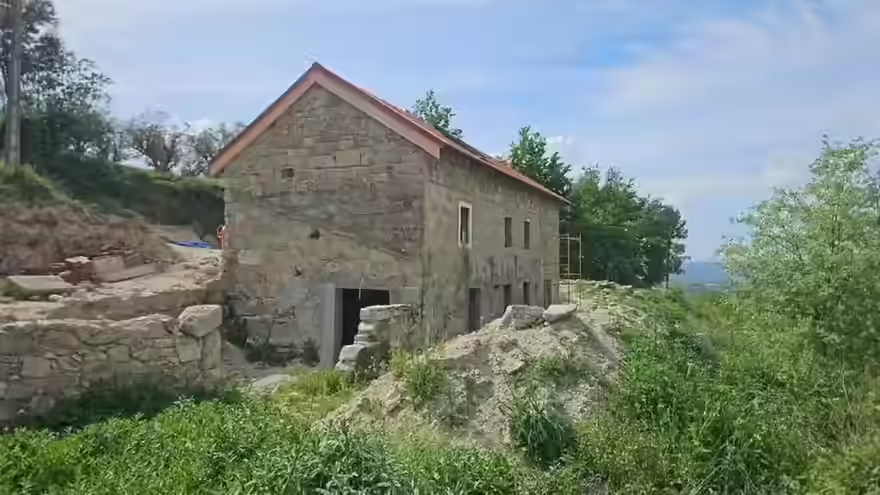
A pile of stone walls does not come with a right to rebuild. What you need is documentary proof that a building legally existed there, and evidence of its footprint and its volume. Registry entries, old caderneta, aerial photography, licence records. Without that, the Câmara has nothing to approve.
Even with it, rebuilding normally means keeping the original footprint and volume, with modest room for an increase in some municipalities. You are not putting a five-bedroom house on the footprint of a two-room granite cottage because the plot happens to be big.
And rural land carries constraints stacked on top. PDM zoning. RAN if it’s classified agricultural reserve. REN if it’s ecological reserve. In plenty of municipalities the declared state of ruin removes the rebuild right rather than granting it. There is no automatic exemption for any of this. It’s licensing or comunicação prévia, with real notice periods attached.
The number you want in your hand before making an offer is what it costs to make that specific building habitable, not a general figure off a website. On a stone quinta with no services, structural work to walls and roof, and a licensing route to get through first, you’re in a different league to a city apartment refurb. We price this properly, with the take-off shown, so you can see what drives the number. If you want the per-square-metre bands first, they’re in our guide to what renovation actually costs in Portugal, and the delivery side sits under renovations and restorations.
A vineyard is a licence, not a field
If you’re looking in the Douro this matters enormously, and most buyers have no idea it exists.
Vines aren’t just planted. Planting and replanting run on an authorisation system, and in the Região Demarcada do Douro the IVDP holds the register of vineyard parcels. Your vineyard assets have to be current in SIvv before an authorisation gets issued at all.
Then there’s benefício, the authorisation to produce Port from a given parcel. It attaches to the plot and it carries real commercial value. Restructure the vineyard and you keep the Porto DO right, but within limits: broadly, up to 40 per cent of the farm’s area at a time, with the remaining 60 per cent held in production.
So “comes with three hectares of vines” is a statement about dirt, not about rights. What you want to know is what’s registered, what’s authorised, what benefício exists, and whether any of it is current. Ask for it in writing. A seller who can’t produce it is telling you something.
The services will cost more than you think
Rural means no mains anything, usually.
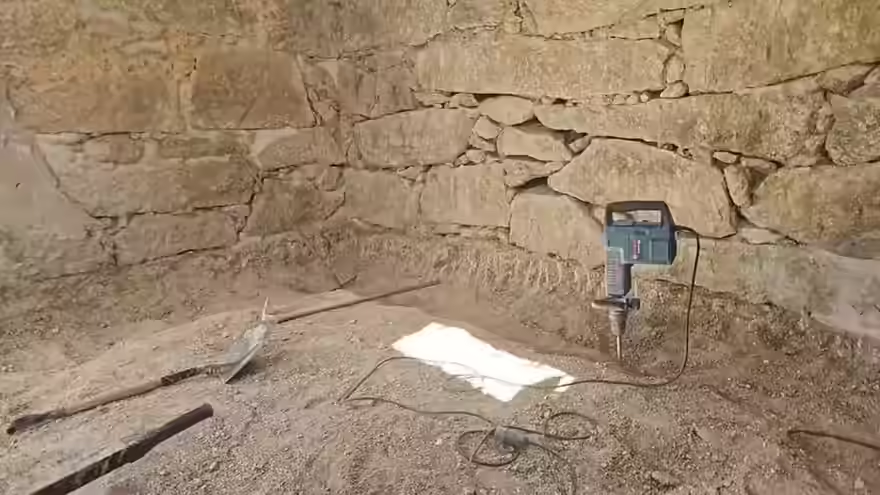
Water. A borehole, a furo, needs licensing through APA. An existing well may or may not be legal, and may or may not hold up in August. Water rights and rights of way for water are their own tangle out here.
Electricity. Grid connection is quoted by distance and by what infrastructure has to be built to reach you. A long run to a remote quinta can be a five-figure number on its own. Get that quote before you buy, not after.
Drainage. Fossa séptica, sized and sited to current standards, plus ground conditions that will actually take it.
Access. If the only way in crosses somebody else’s land and the right of way isn’t registered, you have a problem the day that neighbour sells.
The land comes with a job attached
People buy the view and inherit the maintenance obligation.
If your building has forest land around it, you’re legally required to manage fuel in a 50 metre strip measured from the outside wall. Ten metres where the strip covers agricultural land. Land inside the 100 metre band around a village settlement carries it too. The deadline is annual, 31 May, and it falls on the owner. Not the previous owner. You.
On a few hectares of scrub that’s a real recurring cost and a real fine if you ignore it. Nobody mentions it at the viewing.
Surveys and the paper they’re written on
Here’s the part that will annoy some people.
Most of the documentation handed to a rural buyer in Portugal is historic. The registry description, the caderneta, an old topographic survey somebody’s cousin did in 2008. It describes a property that may not have existed in that form for decades, and as a statement of what you’re actually buying it’s worth close to nothing unless it’s verified and updated at the point of purchase. Georeferenced. Reconciled against the registry. Checked against what’s on the ground.
Same goes for a building inspection, mine included. A report is a snapshot of one specific day. A report from eighteen months ago, commissioned by the seller, tells you what a building looked like to somebody who was working for the other side. Get your own, get it current, and get it before the CPCV rather than after, because the point of an inspection is to change your negotiating position, and once you’ve signed it can’t.
That’s the whole reason I do this independently. No agents, no commissions, no kickbacks, nobody paying me a finder’s fee to tell you the roof is fine.
What we actually do about it
Pre-purchase inspection, from €490 + IVA with the report inside 48 hours. Structure, roof, damp, services, and a plain reading of what’s cosmetic, what’s maintenance and what’s a genuine risk to your money. Rural and quinta properties are priced on the property rather than off a list, because travel, land area and outbuildings all move the number.
Scouting and Property Advisory from €2,200 + IVA, which is three properties inspected and compared side by side. That’s the one I’d push for anyone shortlisting quintas. The value isn’t in any single report, it’s in seeing three properties honestly ranked against each other by somebody with no stake in which one you pick. Rural buyers almost always have a shortlist and almost never have a way of comparing what’s on it.
Independent project management once you’ve bought, for quintas and stone houses. We hold IMPIC alvará 109726-PAR, we work nationwide out of Porto, and Mafalda handles the Portuguese side and the design. Stone, timber, lime, old roofs, licensing through the Câmara, trades sequenced so they’re not standing on each other. A quinta is a different job to an apartment and wants somebody who has done them.
Rural property in Portugal is still good value and I’d buy here myself. The difference between the people who do well out of it and the people who lose forty grand isn’t luck. It’s whether somebody independent walked the boundary, read the zoning and looked at the roof before the money moved.
Got a shortlist of rural properties? Send it over and I’ll tell you which ones are worth the drive. See Scouting or read more in Builder’s Notes.
Buying a quinta or a stone house?
We go through it before you sign: roof, structure, damp, services, and what the rebuild or renovation will really cost. From €490 + IVA up to 150 m², larger and multi-building properties quoted from the listing. Written report within 48 hours.
Book a pre-purchase inspectionComparing two or three?Or message Brad on WhatsApp. Same-day reply.