Damp in old granite and stone houses is the question buyers in the north of Portugal ask me most. The stone itself is rarely the cause, because granite walls have been getting wet and drying out again for centuries. The trouble starts when water is delivered to the foot of the wall every time it rains, and a later repair in cement stops it getting back out. Fixed in the right order, it is a manageable cost.
Pricing this on a property you’re about to buy? Our pre-purchase inspection puts a cost range on every finding, from €490 + IVA. Already own it and holding a quote? Quote Check, €220 + IVA. Not here to run the job? Project management, priced per project.
Why old granite houses get damp
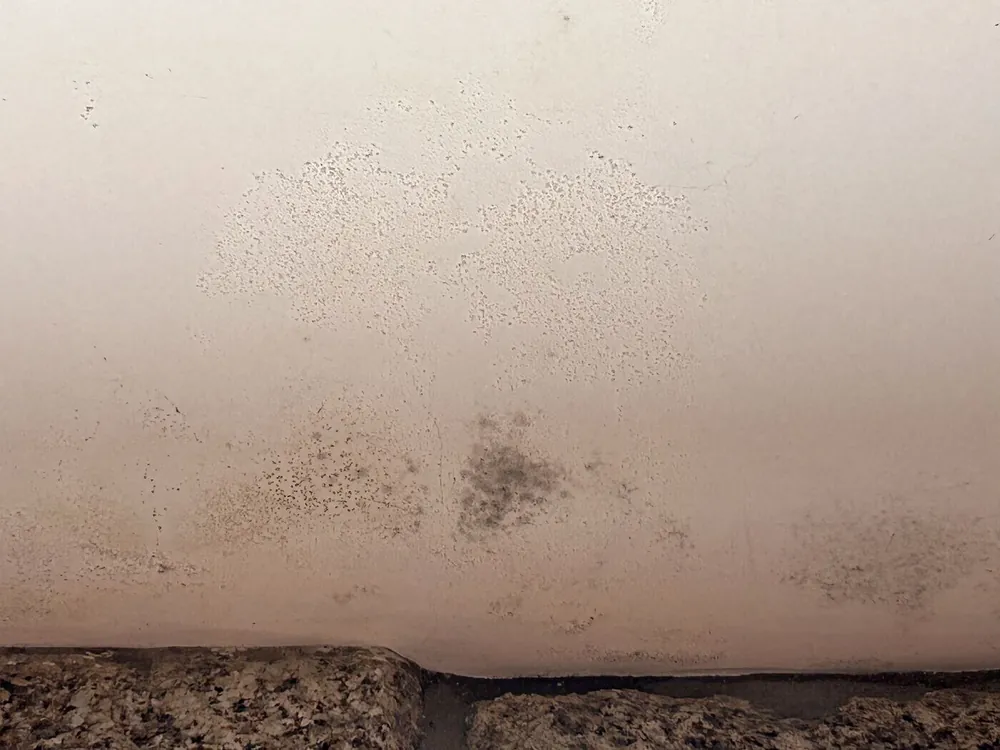
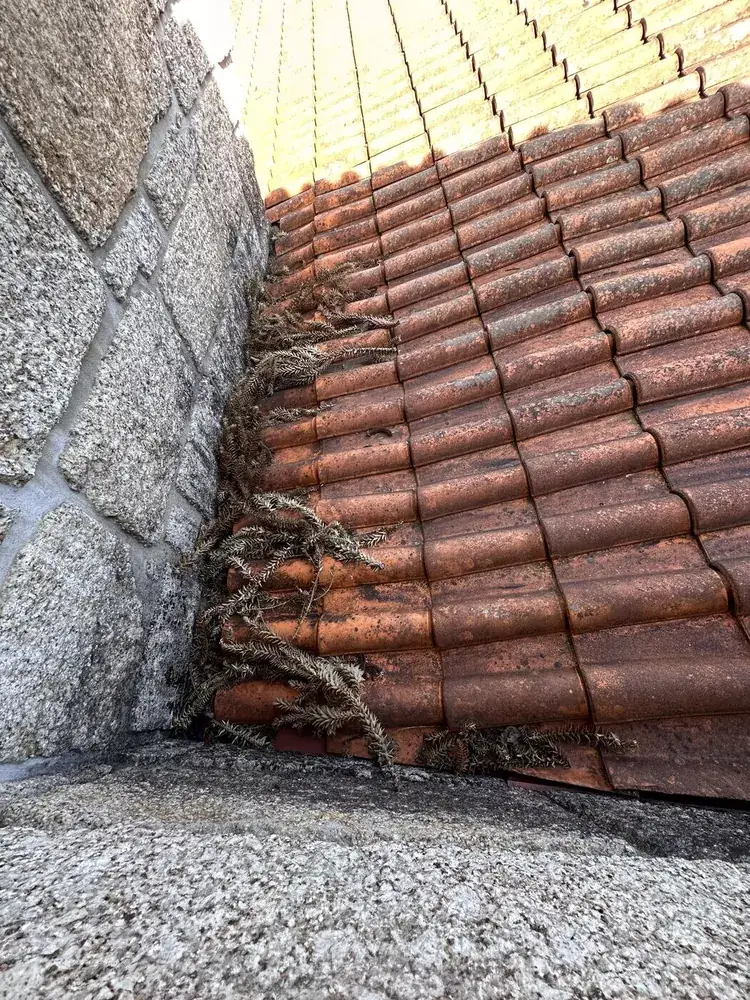
The same three causes come up on our reports again and again: roof water with nowhere to go, ground that sits too high against the wall or drains towards the house, and cement pointing or render from an old repair. Most have at least two. A 1937 farmhouse in the Tâmega had tiles on battens with no membrane, no gutters, and mould at the tops of the walls.
Step 1: gutters, downpipes and drainage
Walk round the outside first. There should be a gutter on every eave, downpipes running into a drain, and ground that sits below the inside floor and falls away from the house. On a rural property, look at where the lane or the slope behind sends its water. If it runs at the wall, a French drain or strip drain along that side is part of the job.
Step 2: let the walls dry
A wall soaked for years holds a lot of water. We usually allow a full drying season before any new plaster goes on. Replaster straight away and the new plaster takes the moisture and salts coming out of the wall. Keep the rooms ventilated while it dries.
Step 3: cement out, lime in
Many were repointed or rendered in cement at some point. Cement is harder and far less permeable than granite and the old lime joints, so water in the wall can’t get out through it. It comes out through the plaster inside, or the face of the stone beside the joint.
The fix we specify is to rake out the cement pointing and repoint in natural hydraulic lime (NHL 3.5) to a depth of 20–25 mm. Plaster loaded with salts gets cut out, and the wall is replastered in lime once it is dry. Waterproof paint and cement tanking slurries do the opposite job on a granite wall, because they seal the water in.
What it costs to fix damp in a stone house
From our own reports over the last two years, ex IVA:
- Gutters, downpipes and a French drain, 17th-century quinta, Minho: €10,500–17,500, then lime replastering €2,000–4,000 after a drying season.
- Rainwater goods, farmhouse, Porto district: €3,500–5,500, plus a strip drain at €3,000–4,500.
- Regrading a lawn that sat too high against the wall, with a French drain and slab edge, Porto: €3,650–6,200.
- Raking out cement, lime repointing and lime replastering, one elevation of a farmhouse, Porto district: €5,000–8,000.
Buying a stone house with damp
Damp in a granite house is rarely a reason to walk away, but price the outside works before you make an offer and take that figure into the negotiation. If the seller has just repainted, look for staining at the base of the walls and at the wall heads. Fresh paint over a wet granite wall usually shows through by the second winter.
Looking at a stone house with damp? Our pre-purchase inspection traces where the water is coming from and puts a cost range on the fix before you sign. From €490 + IVA, across Porto, the Minho and central Portugal.
Questions we get asked
Can you put a damp-proof course into a granite wall?
On a rubble granite wall it is rarely practical. Keeping water away from the base of the wall and letting it breathe through lime is what works.
How long does a granite wall take to dry?
Allow at least one full season once the gutters and drainage are working, and check with a moisture meter before replastering.
Is damp in a stone house a reason not to buy?
Usually it isn’t. Get it diagnosed and priced, and budget for the outside works as well as the plaster.
More on tracing the source: where the water actually comes from. The full write-up of the Minho quinta is in what we find when we inspect a house for sale. Mould in the corners of cold rooms is usually condensation: see cold, damp houses in Portugal. Buying rural? Read buying a quinta.
Figures are from our own inspection reports in 2025 and 2026, ex IVA, with names and addresses left out. Every house is different, so treat them as a guide to scale, not a quote.
Buying an old stone house in Portugal?
We inspect it before you sign: damp, roof, structure, electrics and plumbing. We find where the water is getting in and put a cost range on every fix, so you know the real price before you negotiate. From €490 + IVA, written report within 24–48 hours.
Book a pre-purchase inspectionSee a real reportOr message Brad on WhatsApp. Same-day reply.