Listing photos are taken on a sunny day, after a fresh coat of paint, with the furniture moved to hide whatever needs hiding. That’s normal and it isn’t usually dishonest. But it means the things that cost real money rarely show up until somebody goes looking for them. These are real findings from properties we inspected for buyers this year, with the photo from the report and the repair cost range we gave the client.
Addresses and names are left out. The houses range from a renovated granite quinta in the hills to a recently refurbished top-floor flat .
1. A granite quinta with no gutters anywhere
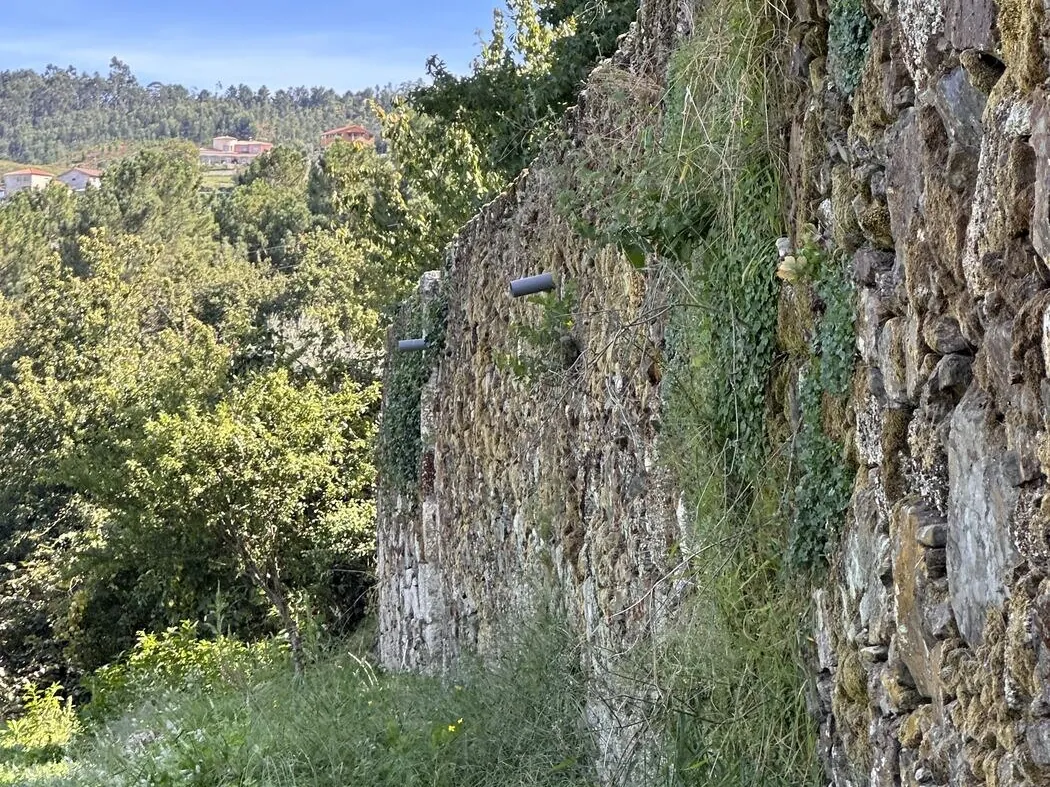
A well-renovated stone house with a sound roof structure and good bones. The problem was simple: no gutters or downpipes on any roof, and a lane on the high side that fell towards the house with no drain to catch it. All of that water was arriving at the base of the street-side walls. Inside, there was a band of blown, salt-stained plaster just above the granite plinth in the rooms along that side.
Granite walls of that age cope fine with rain from above. What hurts them is water standing at the base. The renovation had added an insulated inner leaf, so the wall now dries more slowly than it was built to, which makes the base problem worse rather than better.
What we priced: €10,500 to €17,500 for gutters, downpipes and a French drain along the path, then €2,000 to €4,000 to repair the plaster once the walls had dried. The order matters. Replastering a wall that is still being wetted is money wasted.
2. A stone house with tiles laid straight onto the battens
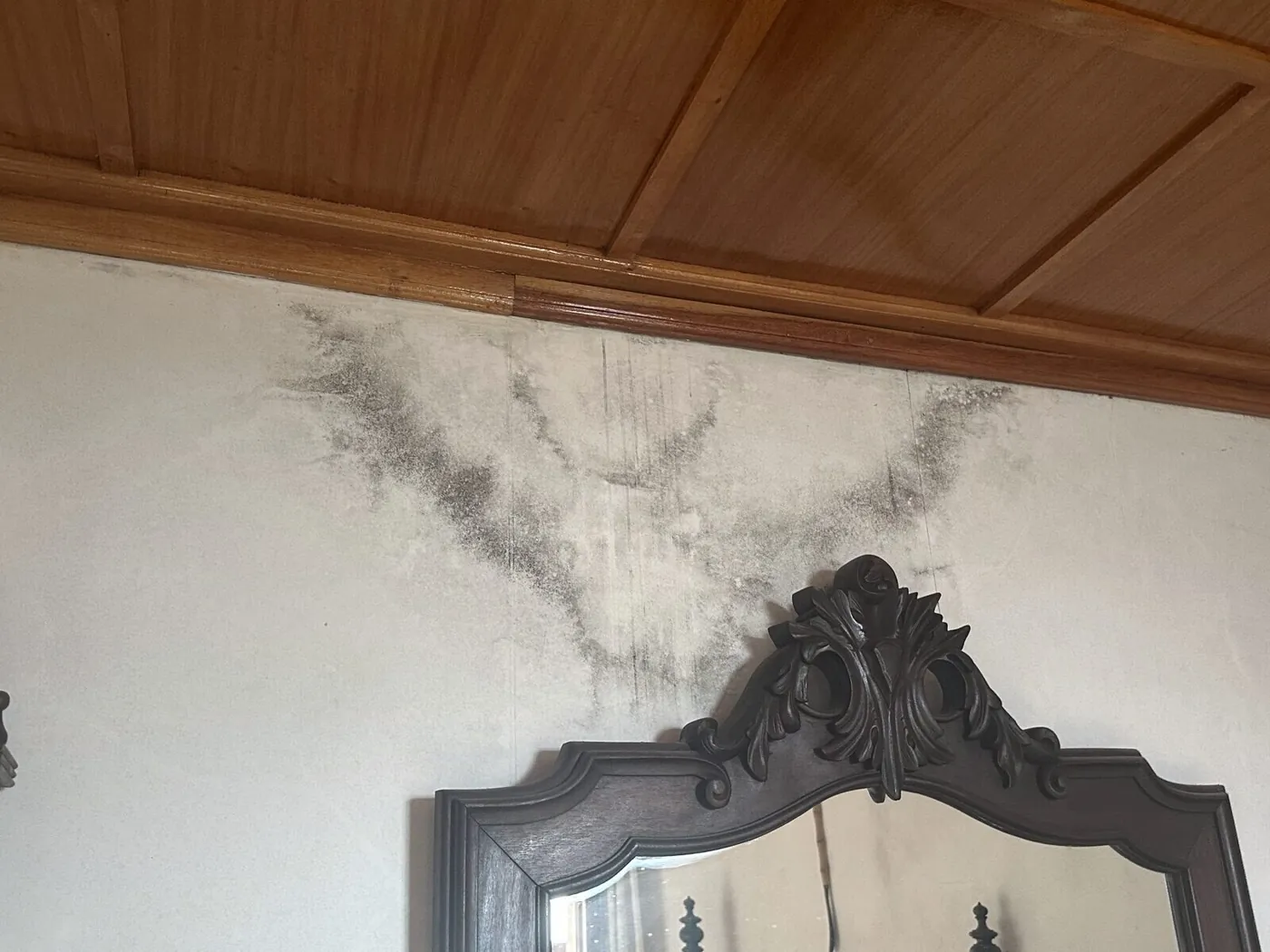
An older granite farmhouse on two buildings. The clay tiles were laid directly on battens over the rafters with no membrane underneath, and there were no gutters on any elevation. In the store you could see daylight through the covering. In the main bedroom, black mould ran in a fan across the top of the external wall just below the ceiling.

A single layer of tiles with nothing behind it relies on every tile and every joint. Once the covering has weathered, wind-driven rain gets to the battens and the rafters and tracks to the top of the wall. Add a house with no heating and no ventilation and the condensation lands on the same cold wall heads.
What we priced: €24,000 to €34,000 to strip and re-roof with a breathable membrane, counter-battens and insulation, €3,500 to €5,500 for a rainwater system, and a provisional €2,500 to €5,000 for timber repairs we couldn’t see until the tiles came off. The purchase could still go ahead. It just needed pricing as a full renovation with the roof first.
3. Fresh paint over a wet wall in a top-floor apartment
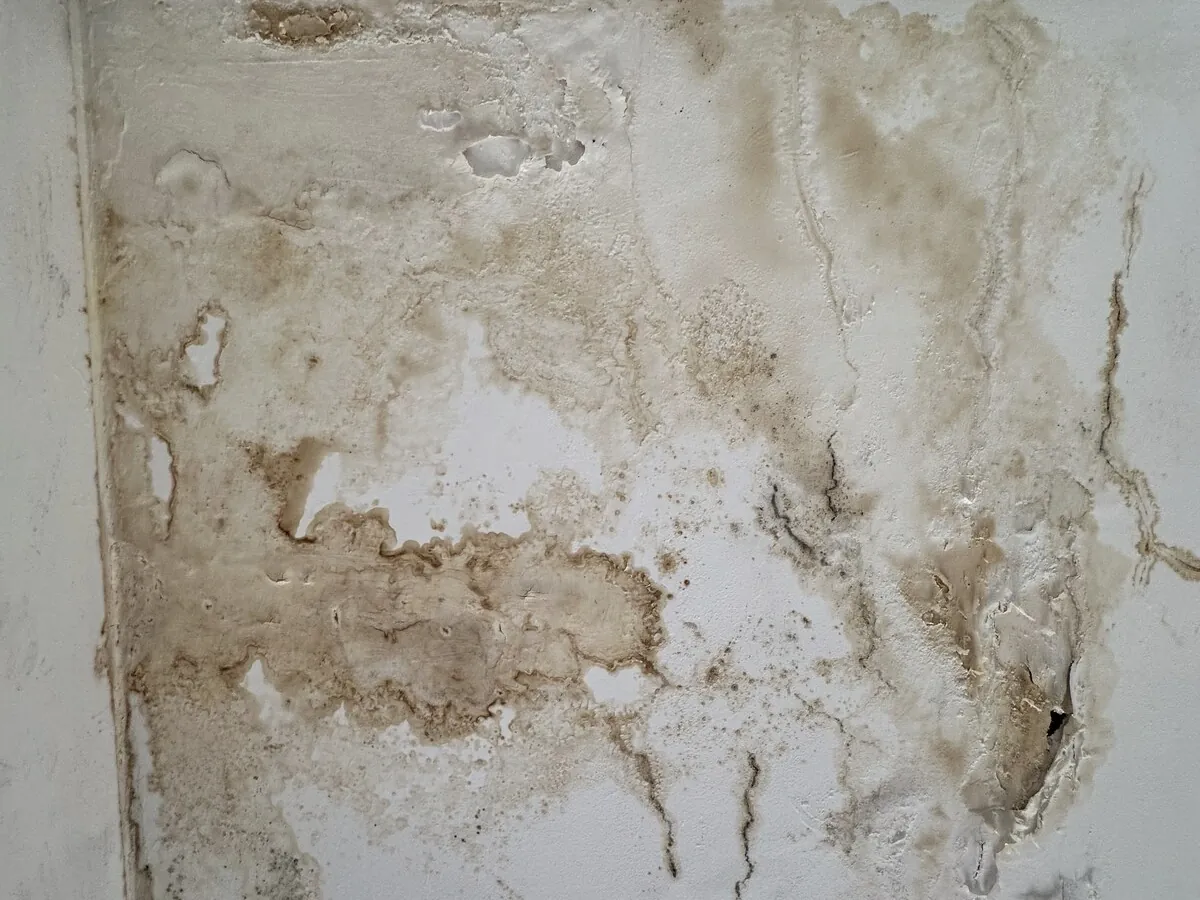
The living room had been repainted, but the damp pattern was coming back through it. The owner said the leak had been fixed. Up on the shared roof, the “fix” was a thin liquid membrane rolled over the old covering. The reinforcement mesh was showing through the topcoat, it was cracking on the flat and coming away at the base of the upstands, and the vent pipes had been cut off as open stubs.
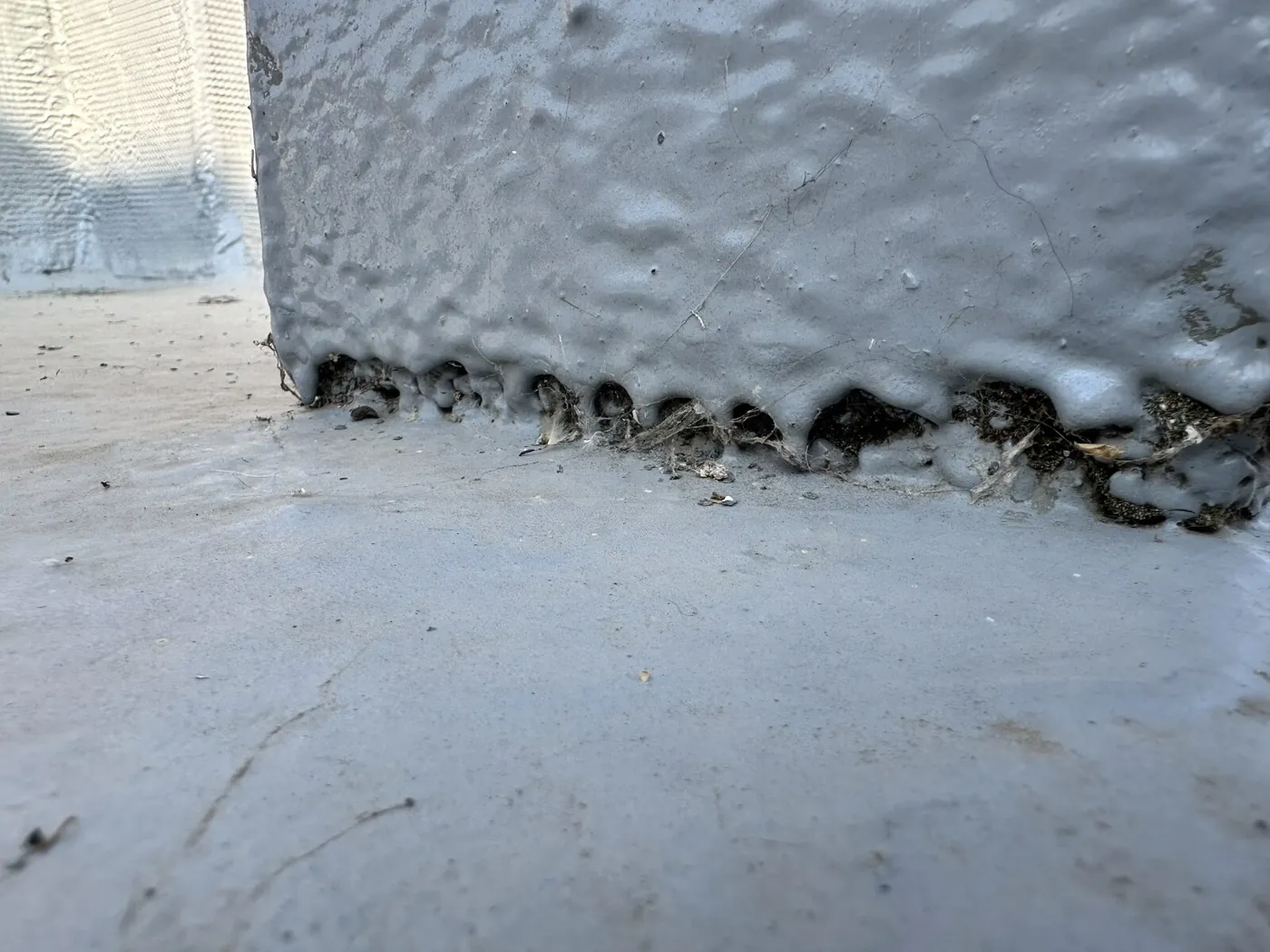
Painting over damp plaster only hides it. And because the roof is common property, the real repair sits with the condominium, so the buyer has no direct control over when it happens.
What we priced: €3,500 to €7,000 for the buyer to cut back, dry out and replaster inside. The roof itself was a condominium cost, typically €60 to €120 per m² to redo properly, with the buyer paying their share by permilagem. On any apartment, ask for the last three years of condominium minutes before you sign the CPCV.
4. An asbestos cement roof at the end of its life
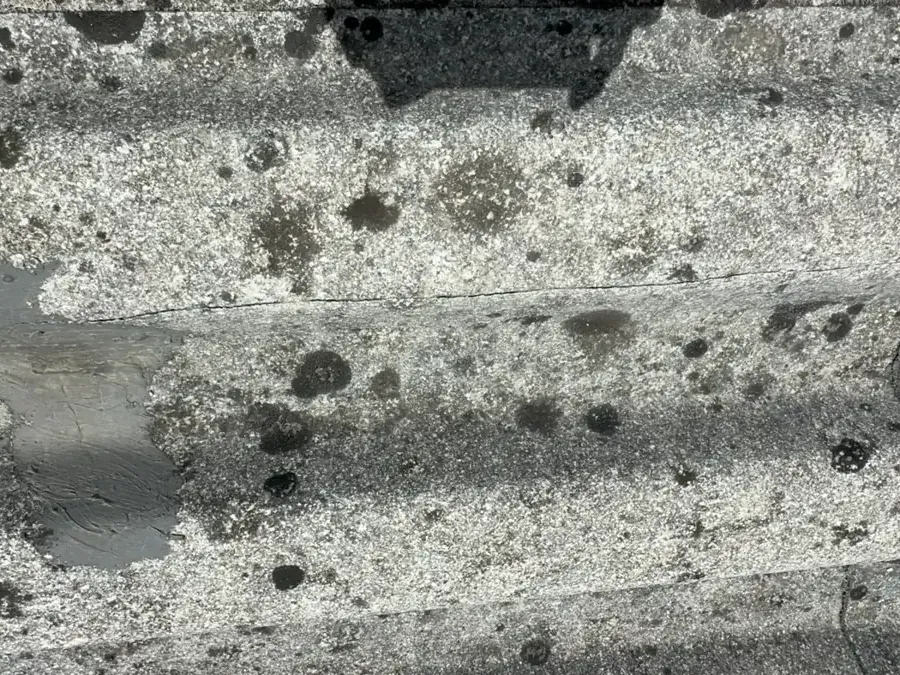
Corrugated fibre-cement sheeting is still on a lot of Portuguese roofs, sheds and garages, and anything put up before the 2005 ban should be treated as containing asbestos until a lab says otherwise. On this house the surface had eroded back to the fibre, several sheets were cracked through, one had a hole clean through it, and someone had been swapping failed sheets for clear fibreglass one at a time. Someone had also squirted expanding foam into the box gutter to stop it overflowing, That usually means the gutter falls the wrong way. It doesn’t fix anything.
Outdoors and left alone it’s no cause for panic. But it can’t be walked on, cleaned, drilled or patched, and it has to come off as one job by a licensed contractor, with the work notified to ACT 30 days in advance.
What we priced: €3,500 to €5,400 for the asbestos removal on its own. The full re-roof came out between about €13,000 and €25,000 depending on the panel spec, and up to about €30,000 with the adjoining terrace waterproofed at the same time.
5. A modern house where the veranda has no gutter

A well-built house about twenty years old, with nothing structural wrong anywhere. The roof above the first-floor veranda only covered part of it, and there was no gutter, so the open section took the run-off. The joints in the granite capping were open, the outlets were half blocked and the frame seals had aged. Water was reaching the base of the wall behind the bedrooms. At the far end it had softened the foot of a timber door frame and stained the floor inside.
What we priced: €3,500 to €6,500 for the veranda, and €1,800 to €4,500 for the door frame and floor. Small money on a house like this, and a fair basis for a modest price adjustment because anyone can see the damage. This house is our published sample report, if you want to read the whole thing.
6. A top-floor flat with water coming down from the roof
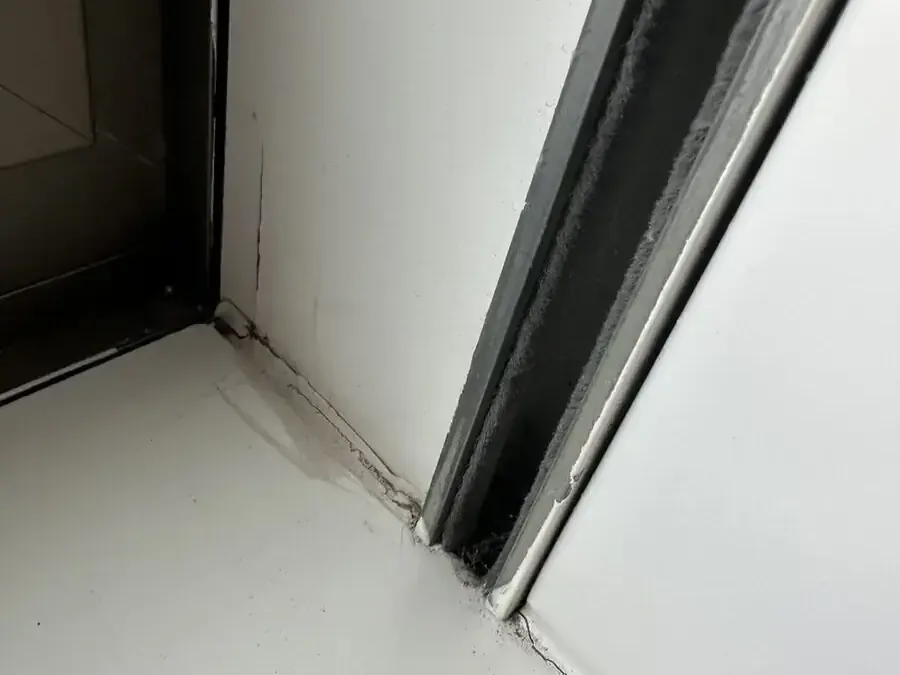
A recently renovated flat that looked excellent. The giveaway was at the bedroom window and on the veranda wall next to it, where the paint was bubbling. Both sit directly under the building’s flat roof. On a top-floor flat this is the defect that matters most, because the repair is on the common roof and the condominium has to commission it.
What we priced: €600 to €1,400 for the buyer’s own making good inside, once the condominium has found and fixed the leak at source.
7. A new bathroom with an extractor that doesn’t work
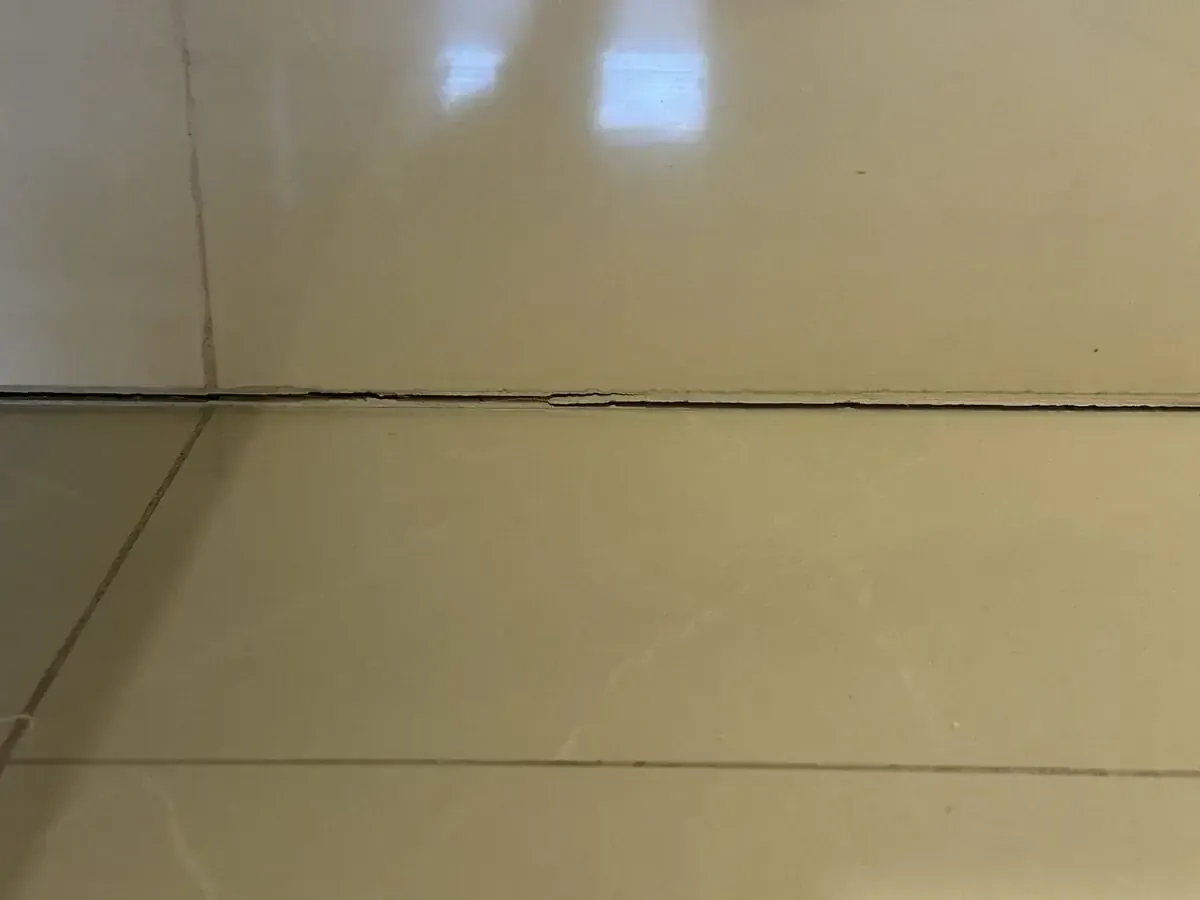
Same flat. The bathrooms were finished nicely, but the joint between the floor and wall tiles had opened up, the silicone at the shower tray had discoloured, and there was mould along the ceiling line. The extract vents were fitted. None of them were running. Steam with nowhere to go condenses on the coldest surface, and the mould will keep coming back after every clean until the air is moving.
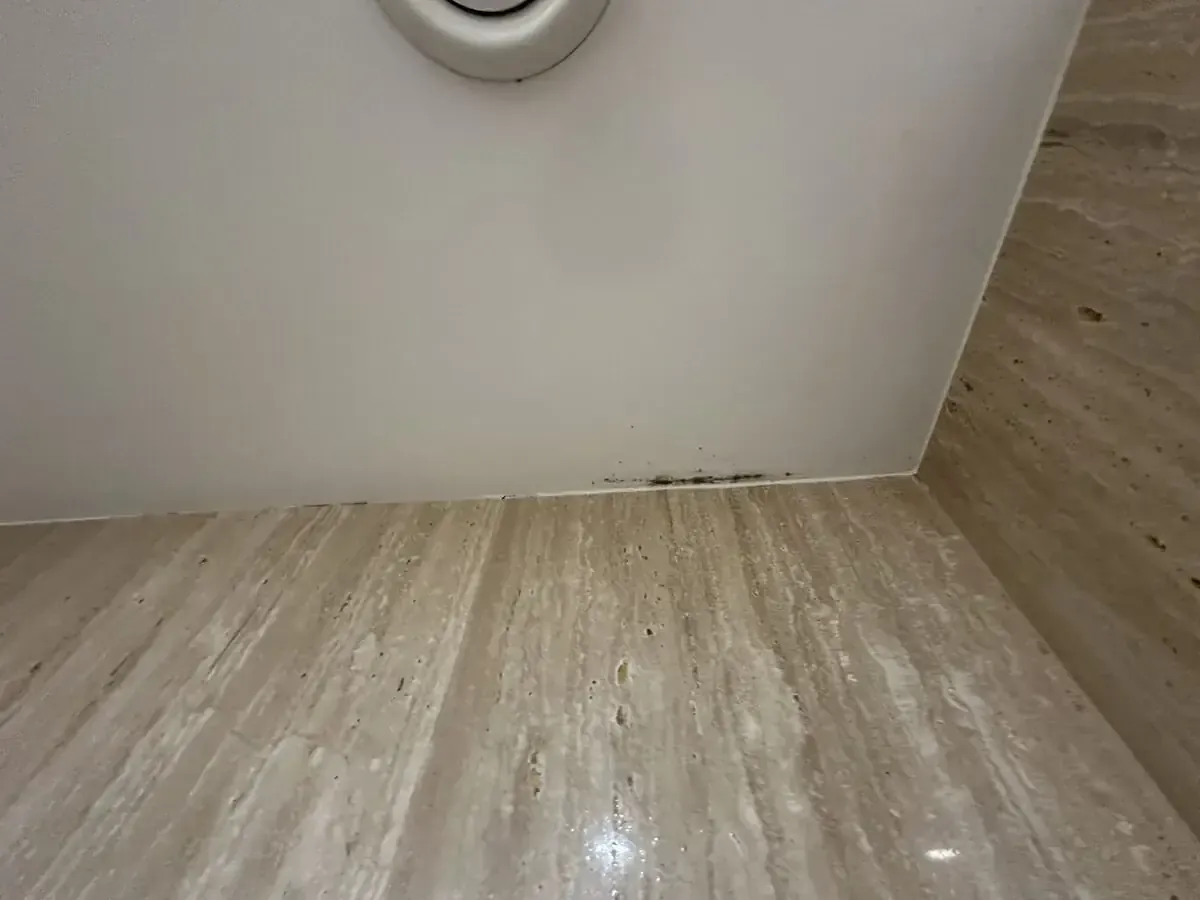
What we priced: €2,200 to €3,800 to reseal and regrout the bathrooms, and €500 to €1,500 to get the extraction working, depending on whether it’s the wiring or the fans.
8. Air conditioning finished with a can of foam
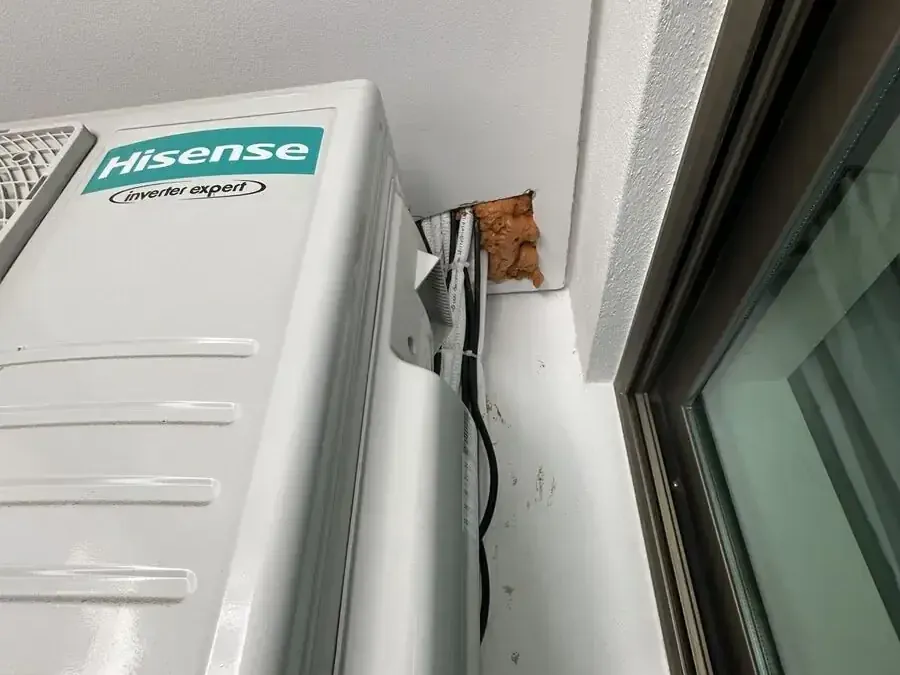
The units themselves were current and working. The installation wasn’t finished. Inside, a trunking cover had been left off with the push-in connectors loose and the condensate pump wrapped in expanding foam. Outside, the wall penetration was packed with bare foam, which breaks down in the sun and becomes a way in for water.
What we priced: €700 to €1,500 to have an installer come back, enclose the connections, seal the penetration properly and service the system. Ask the seller for the installation and F-gas records.
9. A socket hanging out of a broken tile
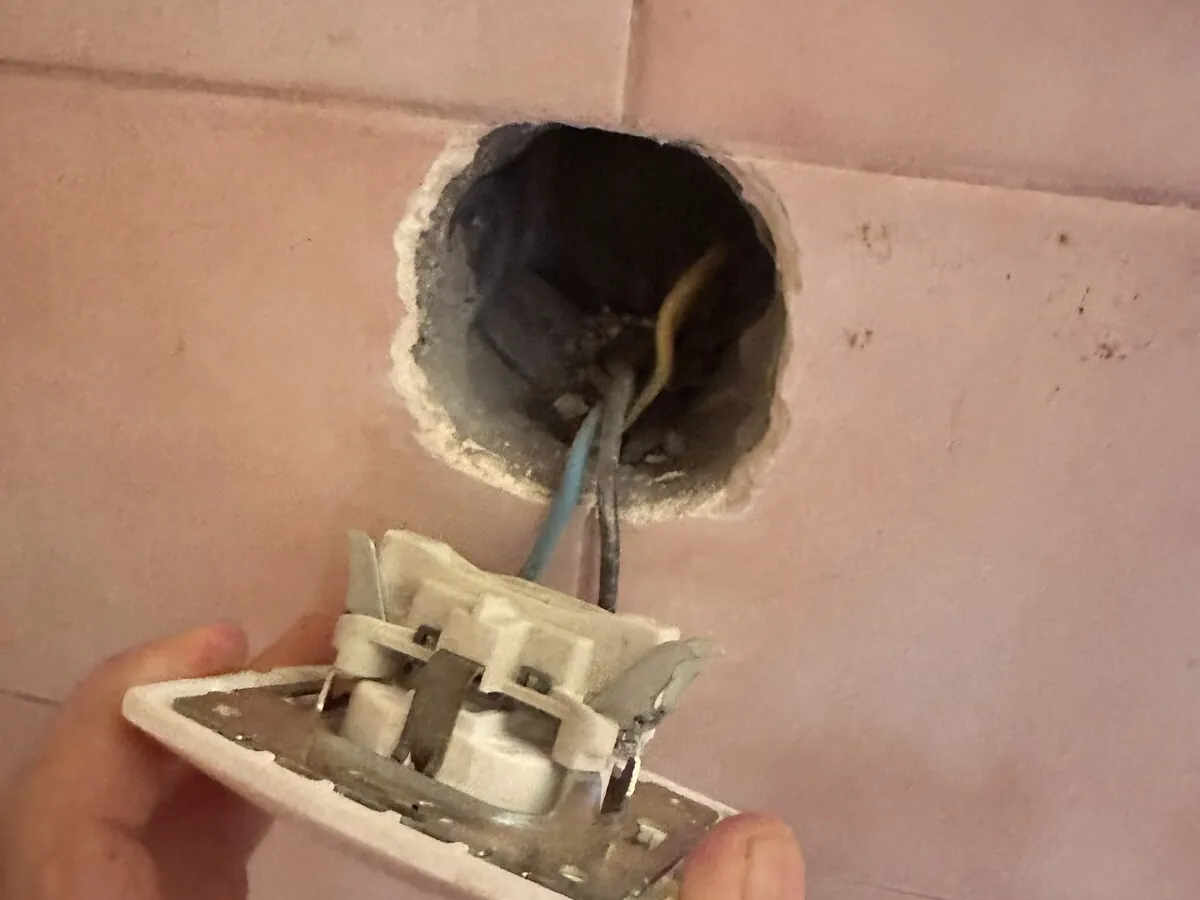
An older apartment with a dated distribution board and a mix of old protective devices, some loose wiring, and one socket pulled out of a broken tile. It didn’t need a full rewire on what we could see. It did need the hazards made safe straight away and a new board with RCD protection.
What we priced: €1,800 to €3,500 for a new board, RCD protection and remedial work with certification, or €6,000 to €10,000 for a full rewire if the walls were being opened for a renovation anyway.
What these have in common
None of these were reasons to walk away on their own. Most were water getting in somewhere it shouldn’t, and most had a clear order of repair: stop the water first, let it dry, then make good. What they changed was the price the buyer should pay, the budget they needed after the keys, and the questions to put to the seller or the condominium before signing.
That’s the point of an inspection. You want to know about the roof before the CPCV, while you can still use it. Our pre-purchase inspection starts at €490 + IVA, with photos, readings, repair costs and the negotiation points in your inbox within 48 hours. Read a sample report first if you want to see what you’d get.
Found a property?
Send us the listing and your deadline. We’ll confirm the fee before you book and tell you straight if the inspection isn’t worth it. WhatsApp is the fastest way to reach us and we answer the same day.
Message us on WhatsApp