Most of the calls we get about a renovation in trouble sound the same. The builder was great for the first two months. Then the site went quiet on Fridays, then on Thursdays. The extras started arriving by WhatsApp with no paperwork. The architect hasn’t been seen since the licence came through. And the owner, often abroad, has paid sixty or seventy percent of the contract for a house that is maybe forty percent built. Here is what to do in the first week, before you fire anyone or pay anyone else.
Mid-renovation and nobody’s checking? The Project Room puts a builder on your side of the table: we check the work before it’s covered up, read every extra against the original quote, and show you what you’ve paid against what’s been built. From €690 + IVA a month.
1. Stop paying until you know what you have paid for
Not forever. Until the next payment is tied to something you can see. The usual position when we arrive is that money has gone out on dates, not on stages. A deposit, then “30% at start of works”, then another slice when the builder said he needed it for materials. Nobody has walked the house with the invoices in hand and asked what each one bought.
So do that first. Print the contract, the quote it was based on and every invoice and transfer. Go room by room. What’s built, what’s half built, what hasn’t been started. If you’re abroad, get someone to do it with a phone camera, slowly, every wall and ceiling. You are not accusing anyone yet. You are finding out where you stand, which is the one thing the builder, the architect and your lawyer will all need from you later.
2. Get everything in writing, from today
Voice notes and site chats are where Portuguese renovations go to die. From this week, every instruction, every price for extra work and every date goes in an email, even if it was agreed on the phone first. “As discussed today, you’ll have the first-floor plumbing finished by the 21st and the price for the new consumer unit is €1,840 + IVA.” One paragraph. Copy whoever else is involved.
Builders who are doing a decent job don’t mind this. Builders who have been drifting mind it a great deal, and their reaction tells you something. Either way, by the end of the month you have a record, and a record is what turns a complaint into a case.
3. Find out who is actually supposed to be checking the work
On a licensed job in Portugal there should be a diretor de obra named by the builder and a diretor de fiscalização named by you, the owner. Both are written into the licence file at the Câmara. Ask your architect who they are. Surprisingly often the answer is that the architect’s office put its own name down as fiscal to get the licence through, and nobody has set foot on site since.
That matters for two reasons. First, the fiscal is the person legally in a position to tell the builder to stop before something gets covered up. Second, if the works have gone wrong, you want to know whether anyone was paid to notice. More on the roles in who checks the builder’s work in Portugal.
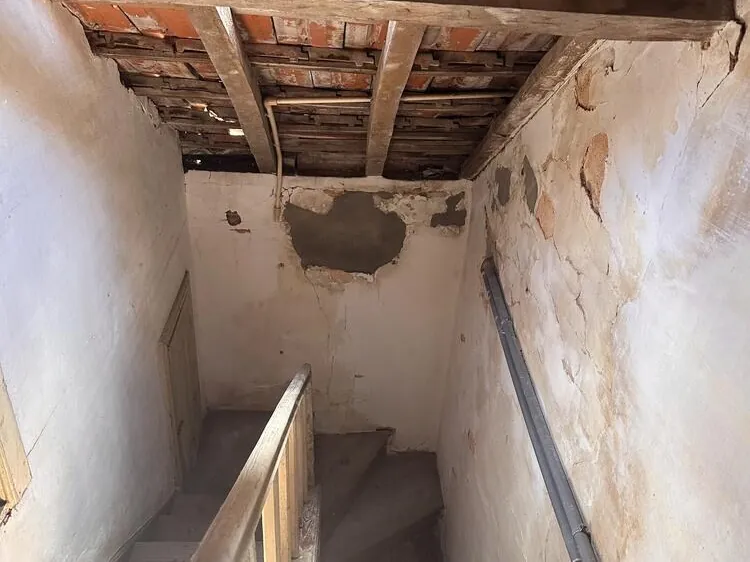
4. Separate the three problems
A renovation in trouble is usually three different problems wearing one coat, and they need different people.
- Programme. The job is late. That’s a management problem. Someone has to sit the builder down, get a two-week look-ahead out of him, and chase it every Monday. Most stalled jobs restart once somebody does this and keeps doing it.
- Money. Extras have been added, the contract sum has drifted, and nobody can say what the final number is. That’s a measurement problem. Each extra needs a price, a reason and a yes or no from you, in writing. See how to check a builder’s extras before you pay.
- Quality. Something has been built wrong, or you suspect it has. That’s a technical problem. It needs a builder or an engineer to look at it before it’s covered, say what’s acceptable and what isn’t, and put a cost on putting it right.
Owners tend to pour all three into a single angry email to the builder. The builder answers the easiest one and the other two carry on. Deal with them separately and the job gets smaller very quickly.
Want someone reading the builder’s extras before you pay them? That’s what the Project Room does. From €690 + IVA a month.
5. Don’t sack the builder on a Friday afternoon
Tempting, and it’s usually the most expensive move available. A builder who has been dismissed mid-job takes his scaffold, his materials and his knowledge of what’s inside the walls. The next builder prices the unknown, and the unknown is dear. We have seen a €180,000 renovation turn into a €260,000 one at the changeover, and about €30,000 of that was simply the second builder protecting himself.
If the relationship really is finished, end it properly. Get the position on paper first (point 1), have a lawyer look at the contract and the termination clause, agree in writing what has been paid for and what is being left on site, and photograph the lot on the day they leave. Then tender the rest to builders who have seen the written position and the photos, so they’re pricing a known quantity. That’s the Build Rescue process, and the order matters.
What usually happens next
In our experience, most jobs that have gone quiet are not fraud. They’re a small builder with too many jobs on, a client who is far away and easy to deprioritise, and nobody on site asking questions. Put someone on your side who turns up, keeps a record and reads the paperwork, and the job generally gets going again inside a fortnight. The ones that don’t restart are the ones where the money was already gone, and the written position from week one is what your lawyer works from.
Either way, the first week is the same. Find out where you stand, write everything down, find out who should have been checking, split the problems, and keep your builder until you have a plan. Then decide.
We are builders, not lawyers. Where there is money in dispute or a contract to end, a Portuguese lawyer does that part. What we give them is the technical position, measured and photographed.
What the Project Room looks like
One private page on your phone. No app, no login. This is a demonstration job.
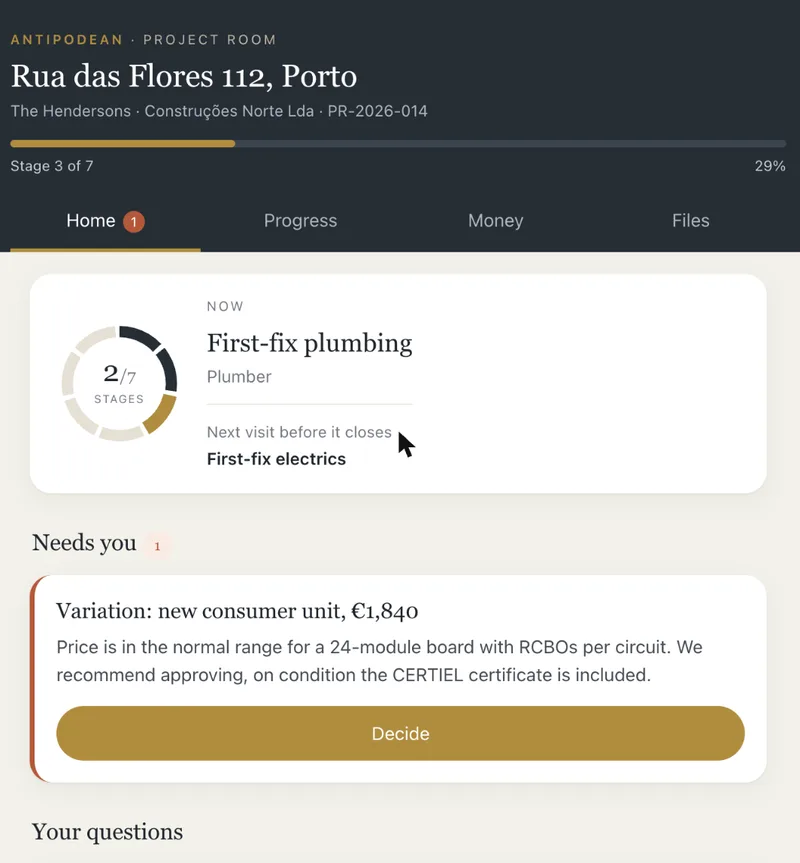
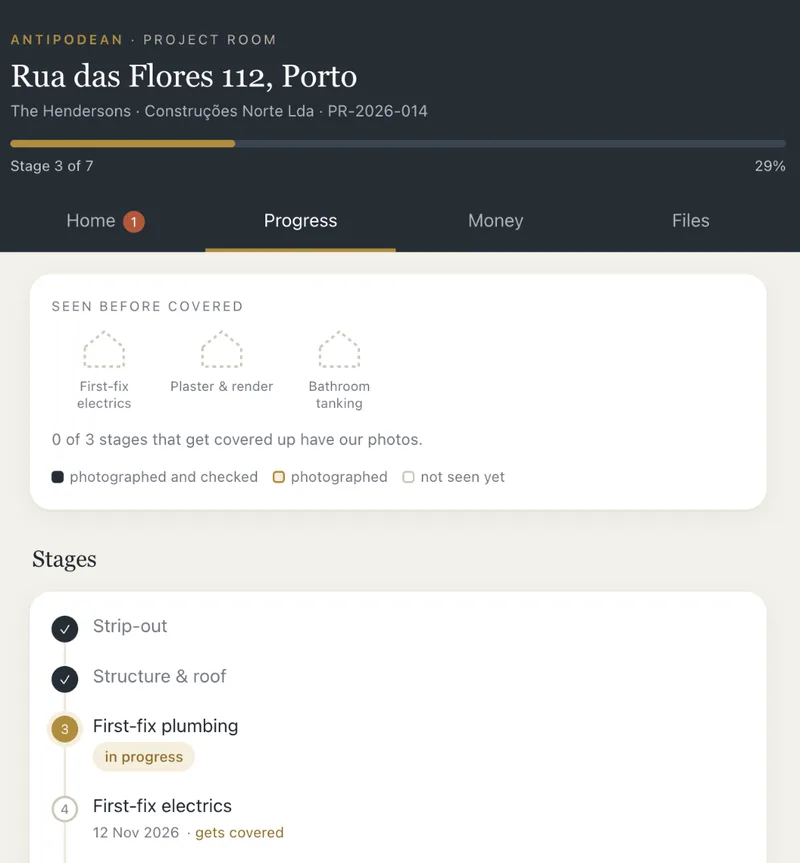
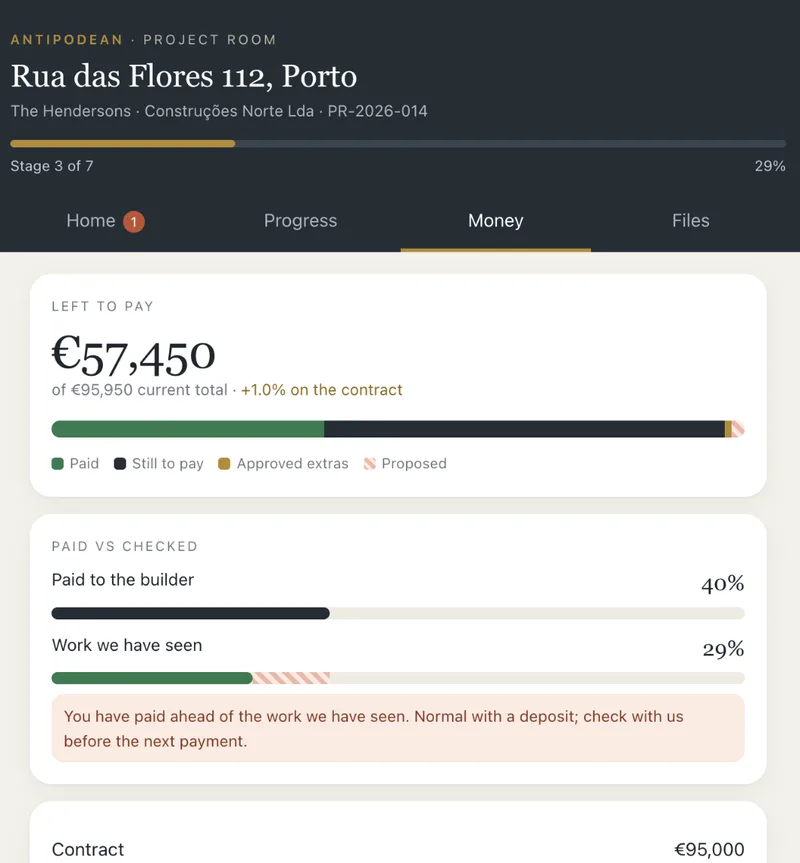
A builder on your side of the table.
You keep your builder. We check the work at the stages that disappear behind plaster and tiles, read every variation against the original quote, and keep what you’ve paid lined up against what we’ve actually seen built. All of it on one private page on your phone. From €690 + IVA a month. If the job has already stopped, Build Rescue picks it up: we assess it, put it in writing and find a builder to finish it.
Haven’t bought yet? Pre-purchase inspection from €490 + IVA.
Or message Brad on WhatsApp. Same-day reply.